


Last Updated: October 30, 2026
Quick Summary
Custom floral design for events is built from scratch rather than from a fixed catalog, so you pay for design time, stem selection, labor, and logistics, not just flowers. Cost drivers include stem type, stem count, design complexity, season, labor, delivery and setup, and vessels or rentals. Ask for a line-item quote that separates flowers, labor, delivery, setup, and rentals so you can compare florists fairly.
- Event floral design runs in four stages: brief, proposal, production, and installation.
- Write a brief with date, venue, guest count, palette, style, budget, and photo moments before calling a florist.
- Spend on the arch, head table, and entrance, and use simpler seasonal designs on guest tables.
- Confirm load-in windows, access routes, insurance, and venue restrictions before install day.
- Decide up front whether arrangements are repurposed, donated, returned, or broken down and picked up.
Table of Contents
- Custom Floral Design for Events: What You’re Actually Paying For
- How Event Floral Design Works From Brief to Installation
- Wedding Flowers: Ceremony, Reception, and Bridal Party Designs
- Corporate Event Flowers That Match Your Brand
- What Drives Flower Arrangement Cost
- Venue Logistics: Delivery, Setup, and Post-Event Handling
- Book Your Custom Floral Consultation
- Frequently Asked Questions
Custom Floral Design for Events: What You’re Actually Paying For
Custom floral design for events is the practice of building arrangements around your venue, color palette, and occasion rather than picking from a fixed catalog. Custom event floral design is built from scratch rather than from a fixed catalog, and that changes how the budget works. You are paying for design time, stem selection, labor, and logistics, not just flowers. For the full picture of what a full-service event florist handles, see our custom floral arrangements for events guide. Below, we break down exactly where the money goes so you can plan with confidence.
The difference between a hand-designed arrangement and a standard bouquet
A standard bouquet is assembled from a preset recipe. A hand-designed arrangement is built around your event brief, your venue’s light and scale, and the season. The gap shows up in three places: stem choice, structure, and how the piece holds up over a long day. For a deeper look, read what makes a florist hand designed.
Hand design is largely a labor decision, because each piece is shaped by hand rather than assembled from a preset recipe.
How Event Floral Design Works From Brief to Installation
Event floral design is a four-stage process: brief, proposal, production, and installation. Each stage protects the next one. Skip the brief and you will spend the proposal stage guessing.
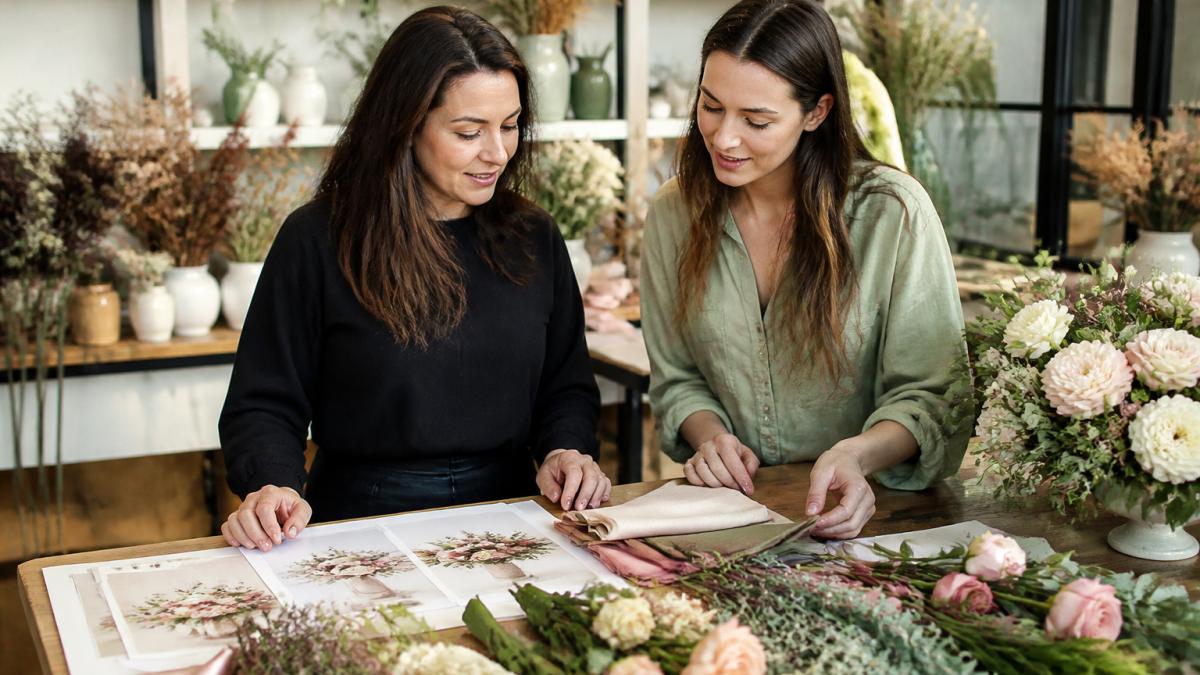
What to include in your event brief
Write these down before you call any florist:
- Date and venue, including load-in and load-out windows
- Guest count and how many tables need centerpieces
- Color palette with two or three reference photos
- Design style: garden, modern, romantic, minimal
- Budget range for flowers, delivery, and setup combined
- Must-have blooms and any allergies to avoid
- Photo moments: arch, head table, entrance, cake table
A brief like this turns a vague conversation into a real quote. It also protects you from surprise charges later.
Wedding Flowers: Ceremony, Reception, and Bridal Party Designs
Wedding flowers are the largest floral line item most couples book, because one event needs several coordinated pieces. Ceremony flowers cover the arch, aisle markers, and altar pieces. Couples considering elevated designs can explore our luxury floral arrangements for weddings guide. Reception flowers cover centerpieces, head table, bar, and entrance. Bridal party designs cover bouquets, boutonnières, and corsages.
The mistake we see most often is treating these as separate orders. They should share one color palette and one design language, or the photos will look like two different weddings. Before you book, see our guide on how to choose a wedding florist.
Corporate Event Flowers That Match Your Brand
Corporate floral decorations work best when they read as brand, not decoration. Match the palette to your logo and materials, keep the scale appropriate to the room, and choose designs that survive a full business day without wilting.
Where corporate orders go wrong is consistency. A single event looks fine, but a quarterly series of events drifts in style unless one florist holds the design standard. Give your florist a one-page brand sheet: colors, logo file, tone words, and any flowers to avoid.
What Drives Flower Arrangement Cost
Flower arrangement cost comes down to a handful of factors that you can actually control. Understanding them lets you compare quotes fairly and decide where to spend and where to save. Exact quotes depend on your date, quantity, and venue, but the drivers are consistent.
The main cost drivers
- Stem type, premium blooms and imported varieties cost more per stem than seasonal or locally grown ones.
- Stem count and arrangement size, a fuller piece uses more stems; scale up the count and the price follows.
- Design complexity, hand-wiring, cascading shapes, and foam-free mechanics take more labor than a simple cluster.
- Season and availability, out-of-season stems carry a premium; in-season stems stretch the budget further.
- Labor, conditioning, building, and on-site adjustment are real time costs, especially for installations.
- Delivery and setup, distance, access difficulty, and install time all factor in.
- Vessels and rentals, reusable urns, stands, and vases may be rented or purchased.
How to read a quote
Ask for a line-item quote that separates flowers, labor, delivery, setup, and rentals. That single request makes it easy to compare florists fairly, because a low total can hide a separate delivery or teardown charge. A quote that lists assumptions, stem counts, vessel type, install window, is easier to trust than a single number.
Where to save and where to spend
A common pattern is to spend on the pieces guests photograph most, the arch, head table, and entrance, and use simpler, seasonal designs on guest tables. Repurposing ceremony flowers at the reception can help stretch the same budget further. Ask what is at its best on your date, and let the answer shape the palette.
Seasonal flowers and local availability
In-season flowers often cost less than out-of-season ones, and asking what is at its best on your date can help you plan your palette.
Here are the main factors that drive flower arrangement cost, all of which you can control.
| Cost driver | What affects it |
|---|---|
| Stem type | Premium and imported blooms cost more per stem |
| Stem count and arrangement size | Fuller pieces use more stems; price follows |
| Design complexity | Hand-wiring, cascading shapes, foam-free mechanics take more labor |
| Season and availability | Out-of-season stems carry a premium; in-season stretch budget |
| Labor | Conditioning, building, on-site adjustment are real time costs |
| Delivery and setup | Distance, access difficulty, and install time factor in |
| Vessels and rentals | Reusable urns, stands, and vases may be rented or purchased |
Venue Logistics: Delivery, Setup, and Post-Event Handling
Venue logistics decide whether a beautiful design actually survives the day. Treat logistics as a design input, not an afterthought.
Measure the room before you choose the flowers
Ask the venue for its floor plan and ceiling height, then confirm the numbers yourself on a site visit. Record:
- Table dimensions and shape, a round table and a banquet table need different centerpiece footprints.
- Ceiling height and hanging points, an arch or suspended installation needs a safe attachment point and clearance above guests.
- Sightlines, whether centerpieces will block conversation across the table, and whether tall pieces need a slim base.
- Doorway and elevator dimensions, a wide arch or a large urn has to fit through the path it travels.
- Power and water access, useful if the design includes lit elements or fresh-water top-ups.
A common pattern is to design at the venue’s scale rather than the florist’s worktable. For reception pieces, see the guide to the best florist for wedding centerpieces. A centerpiece that looks generous in a shop can disappear in a ballroom, and one built for a ballroom can overwhelm a small dining room.
Confirm access, setup windows, and venue rules
Every venue has its own rules, and they shape the install schedule:
- Load-in and load-out windows, confirm the exact times, including whether setup can happen the day before.
- Access route, loading dock, service elevator, or front entrance, and whether carts are allowed.
- Certificate of insurance, many venues require your florist to provide one before arrival; request it early.
- Restrictions, open flame, hanging from ceilings, confetti, or water on certain floors.
- Setup and teardown responsibility, who removes vessels, and by when.
Build setup time before guests arrive, not during. A realistic install window accounts for unloading, positioning, and a final walk-through.
Plan the post-event handling up front
Skipping the post-event plan means centerpieces get tossed in a venue bin by midnight. Decide before the event whether arrangements will be:
- Repurposed, ceremony pieces moved to the reception or entrance.
- Donated, to a hospital, care home, or community group, with pickup arranged in advance.
- Returned, if the florist supplies reusable vessels that must come back.
- Broken down and picked up, confirm the teardown window and who is responsible.
The practical rule: if it is not written into the quote, it is not planned.
Book Your Custom Floral Consultation
The challenge with event flowers is that the design only works if the planning behind it does.
Memory Lane Florals & Creative Accent is a family-owned and operated local florist with hand-designed arrangements, seven-day-a-week service, and same-day delivery options. For weddings, corporate events, and celebrations, contact us for a quote based on your brief.
Get started with Memory Lane Florals & Creative Accent and turn your event brief into a floral plan you can trust.
Frequently Asked Questions
How far in advance should I order custom event flowers?
For weddings and large corporate events, book a consultation four to eight weeks ahead so there’s time for a design brief, seasonal flower sourcing, and a venue walkthrough. Smaller events like birthdays or anniversaries can often be arranged with a week or two of notice. Confirm your date early.
What information should I give a florist when requesting event flowers?
Bring the date, venue address, guest count, and event start time. Share your color palette, design style, and any inspiration photos. Mention budget openly so the florist can suggest flower varieties and scale that fit. Note practical details too: whether the venue allows setup access, whether arrangements need to move between ceremony and reception, and who takes the flowers home afterward. A clear brief reduces revisions and keeps your flower arrangement cost predictable.
How can I choose flowers that suit my event theme and budget?
Start with your color palette and the mood you want, then let the florist match seasonal varieties that deliver that look at your price point. In-season blooms often cost less. If your budget is tight, put more of it into statement arrangements at entrances and head tables, and use simpler centerpieces elsewhere. Ask about reuse, such as moving ceremony flowers to the reception, which stretches your custom floral design further.
Do you handle large events like weddings with 15 or more tables?
Contact us to discuss your event size and needs. Share your table count and venue details during the consultation so the florist can plan quantities, delivery timing, and setup crew. Larger events benefit from booking early and confirming a venue walkthrough to sort out access, power, and breakdown logistics.


