


Table of Contents
- Understanding the Meaning of Sympathy Flowers
- Traditional Flower Choices for Funerals and Memorials
- Appropriate Flower Colors for Funerals
- Types of Funeral Arrangements: Casket Sprays, Standing Sprays, and Wreaths
- What Is the Cost of Large Funeral Standing Sprays
- Etiquette for Sending Flowers: Timing, Delivery, and Cultural Sensitivity
- How to Write a Sympathy Card Message With Your Flowers
- Frequently Asked Questions
Last Updated: September 25, 2026
Understanding the Meaning of Sympathy Flowers
Sympathy flowers are a heartfelt gesture sent to express condolences during times of grief and loss. They communicate support, respect, and compassion when words alone feel insufficient. Flowers have long served as a universal language of comfort, offering a visual tribute to the deceased and acknowledging the pain of those left behind.
The tradition of sending flowers to funerals dates back centuries. Different blooms carry specific meanings rooted in cultural and religious symbolism. White flowers often represent purity and peace. Red blooms convey deep respect and admiration. Soft pastels suggest gentleness and grace.
When selecting appropriate sympathy flowers, you’re not just picking a bouquet, you’re making a meaningful statement about your relationship to the person who has passed. The choice matters. It shows thoughtfulness and care during a vulnerable time.
At Brampton Florist, our expert designers understand the weight of this decision. We help families and friends choose arrangements that feel authentic to their loss and reflect the life being honored. Our team is here to support you.
The best sympathy flowers are fresh, elegant, and delivered promptly. Avoid overly bright or festive blooms, the goal is reverence, not celebration.
Traditional Flower Choices for Funerals and Memorials
Certain flowers have become traditional choices for funeral services and memorial gatherings. These selections carry generations of meaning and are widely recognized as appropriate for bereavement.
Lilies are perhaps the most common choice. White lilies symbolize the restoration of innocence to the soul of the deceased. They’re elegant, fragrant, and command attention in any arrangement. Many families choose lilies as the focal flower because they convey both beauty and spiritual significance.
Roses work well in funeral arrangements too. White roses represent reverence and humility. Red roses express deep love and respect. Pink roses suggest gratitude and admiration. Avoid bright red roses, which can feel too celebratory for a solemn occasion.
Chrysanthemums hold special meaning in many cultures. In some traditions, they’re the flower of death and are reserved specifically for funerals. In others, they represent truth and devoted love. Their full, round blooms create a sense of completeness and closure.
Carnations offer a budget-friendly option without sacrificing meaning. White carnations symbolize pure love and good luck. Pink carnations represent affection and gratitude. They’re durable, long-lasting, and work beautifully in both large arrangements and modest bouquets.
Orchids bring an element of grace and strength. They suggest rare beauty and enduring love. Orchids work especially well when the deceased was known for elegance or sophistication.
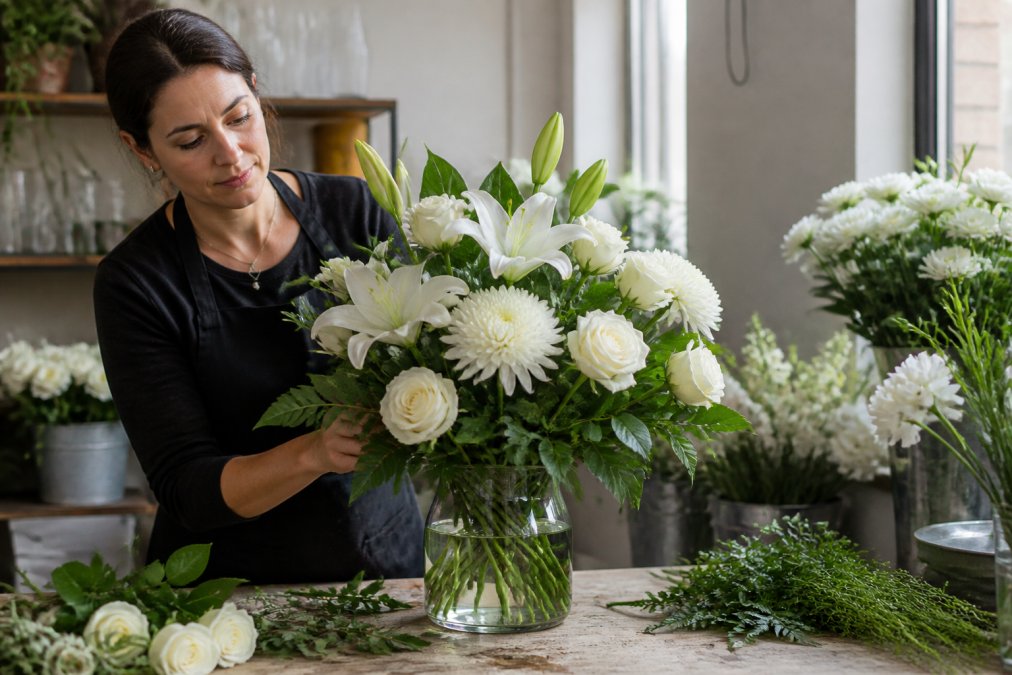
When you order from Brampton Florist, our designers select the freshest blooms available and arrange them with care. We understand that each arrangement should feel personal and respectful to the occasion.
White and soft-colored blooms are the safest choice for funerals. Lilies, roses, carnations, and chrysanthemums are traditional selections that honor the deceased with dignity.
Appropriate Flower Colors for Funerals
Color carries meaning in bereavement. Choosing the right palette ensures your arrangement sends the intended message of sympathy and respect.
White flowers are the gold standard for funerals. They symbolize peace, innocence, and reverence. White arrangements feel solemn and appropriate for any relationship to the deceased. They work for immediate family, colleagues, and acquaintances alike.
Pale pink and soft blush tones convey gentle sympathy and admiration. These colors feel personal without being overly intimate. They’re appropriate when you want to express care and respect in a more understated way.
Purple and lavender represent dignity, grace, and admiration. They’re especially fitting for honoring someone who was wise, accomplished, or deeply respected. Purple carries a sense of formality and reverence.
Yellow and bright colors should generally be avoided. They feel celebratory and joyful, the opposite of what a funeral calls for. The exception is when the deceased was known for loving bright, cheerful things and the family specifically requests it.
Red flowers require careful consideration. Deep crimson reds can work in arrangements honoring a life of strength and passion. Bright reds feel too festive. If you choose red, pair it with white or soft tones to balance the intensity.
Mixed pastels create a softer, more modern look while maintaining the solemnity of the occasion. Pale pink, lavender, white, and soft green together feel contemporary yet respectful.
The color choice should reflect both the personality of the person who has passed and the formality of the service. A traditional funeral calls for whites and soft tones. A celebration of life might accommodate slightly warmer hues, though restraint is still wise.
Types of Funeral Arrangements: Casket Sprays, Standing Sprays, and Wreaths
Understanding the different types of funeral arrangements helps you choose what’s most appropriate for the service and your budget.
Order Online or Call Now to Order Flowers →
Casket sprays are large arrangements designed to drape across the closed casket during the funeral service. They’re typically the most prominent floral display and are often sent by immediate family or very close friends. A casket spray covers the entire top of the casket with flowers, creating a tribute that’s visible throughout the service.
Standing sprays are tall arrangements placed on easels beside the casket or at the front of the service space. They’re substantial and make a bold statement. Standing sprays are appropriate for family members, close friends, and sometimes workplace colleagues. They’re also common at memorial services and graveside gatherings.
Wreaths are circular arrangements that symbolize eternal life and the cycle of remembrance. They’re often placed at the entrance to the funeral home or at the gravesite. Wreaths work well when you want to honor the deceased with a formal, traditional gesture.
Vase arrangements are smaller, more portable bouquets placed on tables or stands throughout the service venue. They’re versatile and appropriate for many relationships. Vase arrangements are easier to transport and can be taken home by family members after the service.
Casket blankets are arrangements that cover the entire casket, typically sent by the immediate family. They’re the most formal and prominent tribute.
When deciding which type to send, consider your relationship to the deceased, the size of the service, and the family’s preferences. Brampton Florist can help you choose an arrangement that feels right for your situation and deliver it directly to the funeral home.
Always confirm the funeral home’s delivery address and timing before ordering. Some services have specific requirements about when flowers can be delivered and where they should be placed.
What Is the Cost of Large Funeral Standing Sprays
The cost of funeral standing sprays varies based on several factors. Size, flower selection, complexity of design, and delivery distance all affect pricing.
Delivery costs may also apply depending on the distance to the funeral home. Always ask about total cost before placing your order.
For current pricing on standing sprays and other arrangements, contact Brampton Florist directly. Our team can provide quotes based on your specific needs and help you find an option that fits your budget.
Families seeking a prominent, respectful tribute that makes a visual statement during the service.
Etiquette for Sending Flowers: Timing, Delivery, and Cultural Sensitivity
Proper etiquette ensures your sympathy flowers arrive at the right time and in the right way. Understanding these guidelines shows respect for the grieving family and the customs they observe.
Timing matters. Ideally, send flowers as soon as you learn of the death, within 24 to 48 hours if possible. This shows immediate support and ensures blooms arrive while they’re fresh. If you’re unable to send immediately, flowers are appropriate throughout the funeral service and up to a week afterward.
Delivery to the funeral home is standard practice. Call ahead to confirm the address, hours, and any specific instructions. Include a sympathy card with your arrangement. The card should be brief, genuine, and free of clichés. A simple message like “Thinking of you during this difficult time” carries more weight than generic phrases.
Cultural and religious sensitivity is essential.
Avoid these mistakes:
- Sending flowers without a card
- Choosing overly cheerful or festive arrangements
- Waiting more than a week to send flowers
- Ignoring family requests or cultural preferences
- Sending flowers to the family’s home without asking first
How to Write a Sympathy Card Message With Your Flowers
Your sympathy card message should be brief, sincere, and free of clichés. This is your chance to express genuine care without overstepping.
Sample messages:
What to avoid:
- Asking how the death occurred
- Offering unsolicited advice about grief
- Making it about your own experiences
- Using religious language if you’re unsure of the family’s beliefs
- Anything that could be interpreted as judgment
Frequently Asked Questions
What are the most appropriate sympathy flowers to send?
White lilies, roses, chrysanthemums, and orchids are traditional choices for sympathy. Lilies symbolize purity and reverence, while white roses represent grace and admiration. Chrysanthemums are especially appropriate in many cultures as they represent truth and devotion. Avoid bright, cheerful colors or heavily scented flowers that may be overwhelming during bereavement. When selecting appropriate sympathy flowers, consider the deceased’s preferences and the family’s cultural or religious traditions.
What flowers should I avoid when sending sympathy arrangements?
Avoid red roses, which symbolize romantic love, and bright yellow or orange flowers that convey cheerfulness. Heavily fragrant flowers like gardenias or strong perfumed lilies can be overwhelming in enclosed spaces like funeral homes. Skip flowers associated with celebrations, such as sunflowers or festive mixed bouquets. Also avoid flowers that wilt quickly or require extensive care, as grieving families have limited energy for maintenance. Stick to traditional, long-lasting blooms that convey respect and condolences.
Should I send flowers to the funeral home or the family’s residence?
Sending flowers to the funeral home during the viewing or service hours is the most common and appropriate choice. This allows the arrangement to be displayed during the service and seen by attendees. However, you can also send flowers to the family’s home before or after the funeral as a lasting tribute. Check the funeral home’s website or call ahead to confirm their flower delivery policies, as some services have specific guidelines. If the obituary requests no flowers, respect that wish and consider a charitable donation instead.
How much should I spend on sympathy flowers?
The appropriate amount depends on your relationship to the deceased and your budget. Close family members or close friends typically invest more in larger arrangements or casket sprays, while colleagues or acquaintances may choose smaller bouquets or vase arrangements. Budget-conscious options like simple wreaths or modest sympathy bouquets are respectful and meaningful. Focus on the gesture of condolences rather than expense; a thoughtfully chosen arrangement matters more than price. Contact a local florist for guidance on options that fit your budget and relationship.


