


Table of Contents
- Why Local Florists Beat Order Gatherers and Supermarket Flowers
- Fresher Blooms, Longer Vase Life: The Freshness Advantage
- How Buying Local Flowers Keeps Money in the Community
- Same-Day Flower Delivery: What a Real Local Shop Can Promise
- How to Choose a Reliable Florist Before You Order
- Seasonal Blooms, Lower Flower Miles, and Environmental Impact
- Personalized Service and Expert Floral Design for Every Occasion
- Frequently Asked Questions
Last Updated: September 10, 2026
Why Local Florists Beat Order Gatherers and Supermarket Flowers
Ordering flowers from a true local florist is the single most reliable way to get fresher blooms, honest pricing, and arrangements that actually match what you see online. The benefits of ordering from local florists start with a simple fact: your flowers are designed and delivered by the same people who answer your call.
Here’s the part most people get wrong. Many websites that look like neighborhood flower shops are actually order gatherers. They take your order, skim a service fee, then relay it to a real shop with a smaller budget than you paid. What arrives is often smaller, older, or simply not what you pictured. A genuine local florist, like Brampton Florist, designs every arrangement in-house and delivers it directly.
This guide breaks down the real advantages, from freshness and vase life to how your money circulates through the local economy. We’ll also show you how to spot a real florist before you order, so you never pay a middleman for someone else’s work.
Fresher Blooms, Longer Vase Life: The Freshness Advantage
Freshness is the clearest advantage a local florist holds over supermarket flowers. Cut flowers begin aging the moment they’re harvested, and every day spent in cold storage or on a truck shortens the time they’ll last in your vase (peer-reviewed research).
Supermarket and big-box bouquets often travel through a long supply chain before reaching a shelf. A local shop typically buys from nearby growers and regional wholesalers, so stems reach the design table faster. That translates into firmer petals, stronger stems, and blooms that open properly instead of collapsing within days.
A common mistake is judging flowers by price per stem alone. A cheaper bunch that lasts four days costs more per day of enjoyment than a slightly pricier arrangement that holds for a week or more. Local florists also condition their stems, stripping lower leaves and hydrating them correctly, which is a step mass-market supply chains often skip.
Ask your florist which blooms are at their peak this week. A good designer will steer you toward stems that are freshest right now rather than whatever looks fullest in the cooler.
How Buying Local Flowers Keeps Money in the Community
Money spent with a local florist stays in the community in a way that purchases from national chains and order gatherers do not. When you buy from a neighborhood shop, most of the money pays local designers, drivers, and growers instead of flowing to a distant head office (sba.gov).
This is the economic circulation effect. A local shop hires locally, sources from regional greenhouses where possible, and reinvests in the same community that supports it. That spending recirculates through nearby businesses.
Order gatherers break that chain. They capture a service fee and a percentage before passing a reduced amount to a fulfillment shop, which means less money reaches the actual designer and the local economy. Supermarket flowers send most of the value to a centralized supply chain.
There’s a quality angle here too. A local florist’s reputation lives and dies on the same streets where you live. That accountability is why they tend to handle quality assurance more carefully than an anonymous call center.
Same-Day Flower Delivery: What a Real Local Shop Can Promise
Same-day flower delivery is realistic when you order from a shop that actually designs and drives its own arrangements. Because a local florist controls both the design bench and the delivery route, they can often turn an order around within hours rather than days.
Timing matters. At Brampton Florist, orders placed by 1 PM qualify for same-day delivery across the service area. That cutoff exists because designers need time to build the arrangement and drivers need a route that keeps every bouquet fresh. Ordering after the cutoff usually pushes delivery to the next day.
Here’s what separates a real promise from marketing talk. A true local shop can tell you exactly when your flowers will arrive because they’re the ones delivering them. An order gatherer can’t, because they’re waiting on a third party they don’t control.
If you have an urgent request, call the shop directly. A real florist can often advise on what’s achievable that day, even when the online system shows a cutoff.
How to Choose a Reliable Florist Before You Order
The single most useful skill in buying flowers is telling a real local florist apart from an order gatherer. Most articles mention the problem and stop there. Here is the mechanism behind it, and a practical way to verify who you are actually paying.
What an order gatherer actually does
An order gatherer operates a website that looks like a neighborhood flower shop. It has no design bench, no cooler, and no delivery van. When you place an order, the gatherer keeps a service fee and a percentage, then transmits the remainder to a real shop in the delivery area, often with a smaller budget than you paid. The fulfillment shop designs to the reduced amount, which is why the arrangement that arrives can be smaller, use different stems, or look nothing like the photo.
The tell is in the money flow. You paid one price; the designer received less. The difference is the middleman’s cut, and it comes out of the flowers, not the gatherer’s margin.
Signals that separate a real shop from a gatherer
Work through these before you commit:
- A street address that matches the delivery area. A real shop has a physical location you could visit. A gatherer often lists a registered office or a PO box in another region.
- A local phone number, not only a toll-free line. Call it. A real shop answers with the shop name and can describe the cooler.
- Photos of arrangements the shop actually made. Look for consistent style, real backgrounds, and customer-tagged images rather than identical stock photos reused across many sites.
- Named designers or a named owner. A real shop will tell you who designs the arrangements. A gatherer cannot, because the work is outsourced.
- A delivery area that matches where you need flowers sent. If the site claims nationwide same-day delivery from one location, that is a relay, not a local delivery.
- A stated same-day cutoff time. Real shops publish a cutoff because designers and drivers need lead time. Gatherers often promise ‘same-day’ without a cutoff because they are not the ones delivering.
- Clear substitution policy handled in-house. Ask who substitutes stems if something is out of season. A real florist answers directly; a gatherer defers to ‘the fulfilling shop.’
The two-question phone test
Call the shop and ask two questions:
- “What is at its peak this week, and what would you put in a $60 arrangement right now?” A real designer answers with specific stems and a reason. A script reader stalls or offers a generic upsell.
- “Can you confirm the delivery address is inside your own delivery zone, and what time would it arrive?” A real shop confirms both because they drive the route. A gatherer cannot confirm timing because a third party controls it.
If the answers are specific, you are talking to a florist. If they are vague, read from a form, or redirect you to a ‘partner shop,’ you are talking to a middleman.
Order gatherers frequently outrank real shops in search results and advertise ‘local’ delivery while operating from another region. If a site cannot name its designers, confirm a local street address, or state its own same-day cutoff, your money is funding a relay fee rather than flowers.
Why this matters for what arrives
A real local florist designs, conditions, and delivers the arrangement themselves. That single fact controls freshness, accuracy, and whether the flowers match the photo. When you verify the shop before ordering, you are not just avoiding a fee, you are choosing the person who actually touches the stems.
How to verify a business address and phone listing
Seasonal Blooms, Lower Flower Miles, and Environmental Impact
Buying in-season, locally sourced flowers reduces the environmental impact of your purchase, but the reason is more specific than most articles admit. It comes down to how a stem travels and how long it sits in cold storage before it reaches a vase.
The mechanism behind flower miles
‘Flower miles’ describes the distance a stem travels from farm to vase. The environmental weight of that distance depends heavily on the mode of transport:
- Air freight carries the highest emissions per stem. Blooms that cannot survive a long sea voyage, many roses, lilies, and specialty cuts from equatorial growing regions, are flown in, then trucked to a distribution center, then trucked again to a wholesaler, then delivered to a shop.
- Sea freight is far lower per stem but adds weeks of transit, which is why sea-freighted flowers arrive with a shorter remaining vase life.
- Regional ground transport, the route most local florists use, covers the shortest distance with the fewest handling steps. A stem grown a few hours away can be cut, conditioned, and designed within a day or two.
Each transfer adds handling, refrigeration, and time. Locally grown, seasonal blooms cut those steps dramatically, which lowers emissions and preserves freshness at the same time. The two benefits are not separate, they are the same benefit measured two ways.
What is actually in season, and when
Seasonal availability shapes what a good florist can offer at peak quality. Designing with what is in season means better stems and less waste from flowers that were forced or shipped out of cycle.
| Season | Peak Blooms | Why It Matters |
|---|---|---|
| Spring | Tulips, daffodils, hyacinths | Shorter transport, peak freshness after winter imports |
| Summer | Peonies, sunflowers, dahlias | Abundant local supply, lowest flower miles of the year |
| Autumn | Chrysanthemums, dahlias | Hardy stems, strong vase life as local fields wind down |
| Winter | Amaryllis, evergreens, forced bulbs | Reliable seasonal options when local field supply is limited |
Use this as a buying guide, not a rule. A real florist will tell you what is at its peak this week, which is more useful than a calendar because weather shifts timing by weeks.
How to use seasonality when you order
- Ask what is local and in season before you choose a design. A designer who sources regionally will steer you toward stems that are freshest and least travelled.
- Expect better value in peak season. When local supply is abundant, the same budget buys more stems because there are fewer transport and storage costs baked in.
- Accept substitutions in off-season. If you insist on an out-of-season bloom in winter, it will be imported, more expensive, and shorter-lived. A seasonal alternative usually looks better and lasts longer.
- Ask where the stems came from. A real shop can tell you whether the flowers are regional, domestic, or imported. That answer tells you more about freshness than any label.
The farmland and growing-practice angle
Local flower farms support surrounding agricultural land and the growers who work it. Sustainable practices at regional growers, reduced chemical use, crop rotation, and field-grown rather than forced production, support biodiversity in the farmland around them. Choosing seasonal, local stems connects your purchase to healthier cultivation practices and keeps that land in production rather than sold for development.
The environmental case for local flowers is not just about distance. It is about transport mode, handling steps, and time in cold storage. A regional, in-season stem wins on all three, and it usually lasts longer in the vase, which is the benefit you actually see.
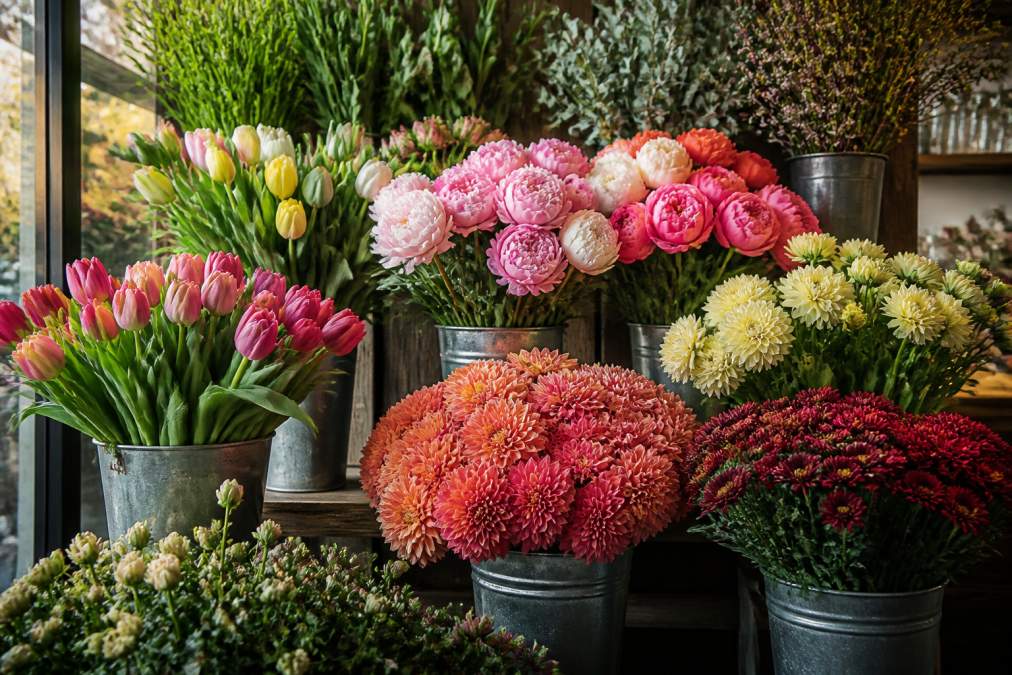
Personalized Service and Expert Floral Design for Every Occasion
Personalized service is where a boutique florist leaves mass-market options behind. A local designer can adapt an arrangement to your budget, the occasion, and even cultural or religious traditions that a generic website can’t accommodate.
That matters for sympathy flowers, where tone and appropriateness carry real weight. It matters for weddings, where floral artistry has to match a color palette and venue. And it matters for corporate orders and cultural ceremonies that call for specific blooms and forms.
At Brampton Florist, every arrangement is hand-designed by expert designers, and the shop is open seven days a week for weddings, funerals, and gifts. Because it’s family owned and operated, you get personalized customer service rather than a call center reading a form.
The value proposition is straightforward. You’re paying for expert design and a real person who cares whether the flowers arrive right, not for a middleman’s fee. For most orders, that’s the difference between flowers that impress and flowers that disappoint.
Frequently Asked Questions
Is it better to order from a local florist than a big flower delivery website?
A local florist designs and delivers your arrangement directly, so stems are cut and conditioned close to delivery day. Large flower delivery websites often act as order gatherers that pass your order to a third party, adding service fees and delays. Ordering from a local florists shop means fresher flowers, a real person you can call, and money that stays in the community.
Why are local florist arrangements fresher than supermarket flowers?
Supermarket flowers often travel long distances through cold storage before reaching the shelf, which shortens their vase life. A local shop buys from nearby growers and wholesalers in smaller, more frequent batches, so blooms spend less time in transit. That shorter supply chain, sometimes called fewer flower miles, means your bouquet typically opens fully and lasts longer after delivery.
How does buying local flowers support the community?
Local flower shops employ designers, drivers, and front-counter staff, and they buy from regional growers and suppliers. That spending circulates through the local economy instead of routing to a call center elsewhere. Many shops also donate to community initiatives, sponsor local events, and support small-scale farming, which keeps farmland productive and preserves jobs in the area.
How do I choose a reliable florist for same-day flower delivery?
Check that the shop lists a real street address and phone number, not just a website. Confirm a cut-off time for same-day flower delivery, since most local shops need orders in by early afternoon. Read recent reviews for delivery reliability and freshness, and ask whether the shop designs in-house or outsources orders. A quick phone call tells you a lot about how responsive and helpful the team is.
Choosing flowers should feel personal, not like a transaction with a stranger. When you order from a real local shop, you get fresher stems, a designer who understands the occasion, and delivery you can actually count on. Brampton Florist offers hand-designed bouquets, same-day delivery on orders placed by 1 PM, and seven-day availability for weddings, funerals, and everyday gifts. Get started with Brampton Florist and send flowers that arrive fresh, on time, and exactly as pictured.


