


Last Updated: October 24, 2026
Quick Summary
Fresh flower care is the practice of keeping cut stems in clean water, cutting them properly, and controlling temperature so blooms stay open longer. Change the water every two days, and every day in hot weather, recutting stems each time. Wash the vase with hot, soapy water and keep it away from direct sunlight, heat vents, and drafts.
- Cut stems at a 45-degree angle with sharp shears, taking 2 to 3 cm off the bottom.
- Strip every leaf that would sit below the waterline, since submerged leaves rot and breed bacteria.
- Commercial flower food feeds stems, kills bacteria, and lowers the water’s pH so stems drink more easily.
- Keep bouquets away from fruit bowls because ripening fruit releases ethylene, which ages flowers fast.
- Don’t mist rose blooms, as water on petals invites botrytis, a grey mold that ruins the flower.
Table of Contents
- Start with a Clean Vase and Fresh Water
- How to Keep Cut Flowers Fresh: Trim Stems and Remove Leaves
- How Often to Change Flower Water (and Why It Matters)
- How to Keep Roses Fresh: Special Care for Rose Bouquets
- How to Make Flowers Last Longer: Flower Food and Alternatives
- Troubleshooting Common Flower Problems
- Order Fresh Flowers for Delivery
- Frequently Asked Questions
Start with a Clean Vase and Fresh Water
Most cut flowers die early for one boring reason: dirty water.
At Memory Lane Florals & Creative Accent, we hand-design every bouquet. The fix is rarely the flowers. It’s the setup.
Start with these steps:
- Wash the vase with hot, soapy water and rinse it well. Bacteria hide in the film you can’t see.
- Fill it two-thirds full with room-temperature water.
- Add flower food if you have it, and stir until it dissolves.
- Keep the vase away from direct sunlight, heat vents, and drafts.
One insider note: a vase that sat in the cupboard for months needs more than a rinse.
The Canadian Food Inspection Agency guide to cut flower imports is a useful reminder of how far stems travel before they reach your counter.
How to Keep Cut Flowers Fresh: Trim Stems and Remove Leaves
Cut stems at an angle with sharp shears, and strip every leaf that would sit below the waterline.
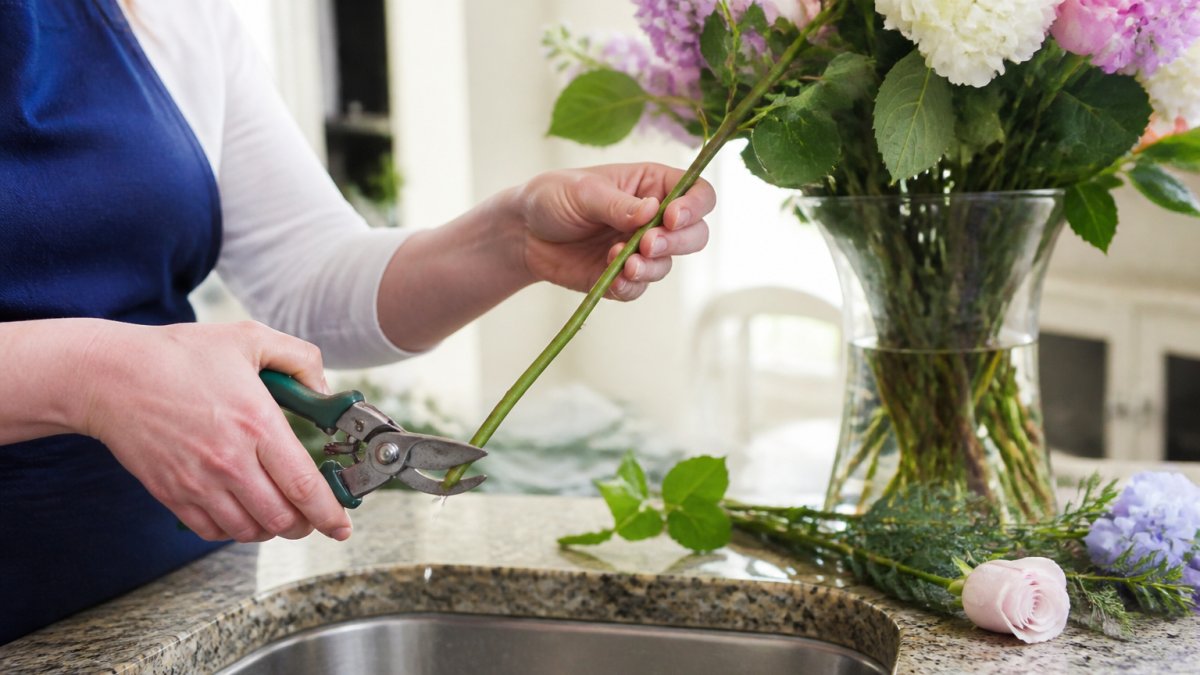
Why the angle? A flat cut sits flush against the vase bottom and blocks water uptake. A 45-degree cut exposes more of the stem’s drinking surface.
Do this every time you change the water:
- Use sharp shears. Dull blades crush the stem and seal off water uptake.
- Cut on an angle. Aim for 2 to 3 cm off the bottom.
- Cut underwater if you can. It stops air bubbles from blocking the stem.
- Remove lower foliage. Leaves under water rot and breed bacteria.
- Trim woody stems twice. Roses and lilacs benefit from a vertical slit up the base.
A common mistake is trimming stems once and never again. Stems seal over within a few days.
How Often to Change Flower Water (and Why It Matters)
Change the water every two days, and every day in hot weather. Cloudy water is bacteria, and bacteria is what shortens vase life.
The mechanism is simple. Cut stems release sugars and cells into the water. That feeds bacteria, which clog the stem ends.
A care schedule keeps it manageable:
| Task | How Often | Why It Matters |
|---|---|---|
| Change the water | Every 2 days | Removes bacteria and keeps uptake open |
| Recut the stems | Every water change | Opens sealed stem ends |
| Rinse the vase | Every water change | Clears the bacterial film |
| Remove dead blooms | Daily | Stops ethylene and rot spreading |
| Check the water level | Daily | Stems drink fast in warm rooms |
Watch out: topping up the water instead of replacing it is the mistake we see most.
A Simple Care Timeline
Most conflicting advice about water changes comes from mixing up three different moments. Here is a schedule that resolves it:
- Arrival day: unwrap, recut 2 to 3 cm at an angle, strip lower leaves, wash the vase, fill with room-temperature water and flower food, and place in a cool spot out of direct sun.
- Daily: check the water level, remove any dropped petals or wilted blooms, and top up only if the water is still clear. If it looks cloudy, do a full change instead.
- Every two days (every day in hot weather): dump the water, rinse the vase, recut the stems, and refill with fresh water and food.
- Every few days: give the vase a full soapy scrub, not just a rinse, and check for slimy stem ends. Slimy ends mean bacteria have won; recut above the slime.
Water Quality and Temperature
Water quality matters more than most guides admit. Hard tap water leaves a mineral film on stem ends and slows uptake. If your water is very hard, let it sit overnight so some minerals settle, or use filtered water.
Temperature is the other lever. Room-temperature or slightly cool water is right for most stems. Warm water dissolves flower food faster and can help revive a drooping stem in a short deep-water soak, but it also speeds bacterial growth, so don’t leave a bouquet in warm water for long.
If you cannot remember the last time you changed the water, that is your answer. Dump it, scrub the vase, recut the stems, and start the schedule again.
For a deeper walkthrough of water changes and overall maintenance, see our guide on how to maintain fresh cut flowers.
How to Keep Roses Fresh: Special Care for Rose Bouquets
Roses need three extra steps: a deep angled cut, removal of guard petals, and cool water. Do those and a rose bouquet will hold its shape far longer. You can apply these tips to our Brampton Dozen Red Rose Vase.
Roses arrive with outer “guard” petals that protect the bloom in transit. They often look bruised. Peel them off gently and the flower opens cleanly.
Then:
- Cut 3 cm off each stem at an angle. Rose stems are woody and seal fast.
- Strip all leaves below the waterline. Rose foliage rots quickly.
- Use cool water, not warm. Cool water slows bacteria and keeps petals firm.
- Keep them away from fruit bowls. Ripening fruit releases ethylene, which ages roses fast.
One thing most guides miss: don’t mist rose blooms. Water on petals invites botrytis, a grey mold that ruins the flower.
How to Make Flowers Last Longer: Flower Food and Alternatives
Commercial flower food works because it does three jobs at once: it feeds the stems, kills bacteria, and lowers the water’s pH so stems drink more easily. Use the packet that comes with your bouquet, mixed to the label ratio.
If you’ve run out, a homemade mix helps. Add a small pinch of sugar for food and a few drops of household bleach for bacteria control.
A safer, evidence-based alternative is a drop of vinegar plus a pinch of sugar. The acid slows bacterial growth and the sugar feeds the stems.
Flower food alternatives, ranked by how well they work:
- Commercial flower food, best results, use it first
- Sugar plus a drop of bleach, good short-term substitute
- Sugar plus vinegar, decent, mild antibacterial effect
- Plain cool water with daily changes, simple and reliable
- Nothing added, still fine if you change water often
For a consolidated set of proven techniques, our fresh cut flower longevity tips cover the full routine in one place.
Troubleshooting Common Flower Problems
Drooping heads, yellow leaves, and cloudy water each have a specific cause and a specific fix. Diagnose before you toss the bouquet.
- Drooping heads: usually a blocked stem. Recut and place in deep cool water for a few hours.
- Cloudy water: bacterial bloom. Dump it, scrub the vase, recut stems.
- Yellow leaves: leaves sitting under water or ethylene exposure. Strip them and move the vase away from fruit.
- Wilting with a full vase: water isn’t moving up the stem. Check for a sealed end or air bubble.
- Brown petal edges: heat or direct sun. Move to a cooler spot.
- Foul smell: old water and rotting foliage. Full reset needed.
A quick note on water quality. Hard water leaves mineral film on stems and slows uptake. If your tap water is very hard, let it sit overnight before use.
Flower-Specific Care
One-size-fits-all advice is the reason so many bouquets fail. Stem preparation, water needs, and ideal conditions differ by flower type. Here is how the most common stems differ:
- Roses: woody stems that seal fast. Cut 3 cm at an angle, slit the base vertically, strip all lower leaves, and use cool water. Do not mist the blooms; water on petals invites botrytis.
- Tulips: they keep growing in the vase, sometimes several centimeters. Use a taller container and expect the stems to lean. Cool water and a clean vase matter more than flower food.
- Hydrangeas: they drink through their petals as well as their stems. Mist the blooms and keep the vase full; a wilted hydrangea can often be revived by submerging the whole head in cool water for an hour.
- Lilies: remove the pollen-bearing stamens as soon as the buds open. The pollen stains fabric and is toxic to pets, and removing it also keeps the bloom cleaner longer.
- Carnations: ethylene-sensitive. Keep them away from fruit bowls and ripening produce, and recut often because their stems seal quickly.
- Daffodils: their sap is toxic to other flowers. Keep them in their own vase for a day before mixing, or the sap will clog the stems of everything else.
- Sunflowers and other thick stems: they drink heavily. Check the water level daily and use a deep vase.
If you mix flower types in one arrangement, group the ethylene-sensitive stems away from ripening fruit and keep the daffodils separate for the first day.
Food, Fruit, and Ethylene Exposure
Ripening fruit releases ethylene, a gas that ages flowers fast. Keep bouquets away from fruit bowls, ripening bananas, and produce drawers. The same gas comes from dying blooms, which is why removing wilted flowers daily protects the rest of the arrangement.
For a consolidated set of proven techniques, our fresh cut flower longevity tips cover the full routine in one place.
Order Fresh Flowers for Delivery
The best care routine starts with flowers that arrive fresh. That’s the part you can’t fix at home. A bouquet that sat in a hot van for hours is already behind.
We’re a family-owned florist serving the area with hand-designed bouquets, plants, and gift baskets. Every arrangement is built to order, not pulled from a cooler shelf. Learn more about same-day delivery in Brampton.
Ordering is simple:
- Pick your arrangement online or call us.
- Tell us the delivery date and the recipient’s details.
- We design and hand-deliver it fresh.
Frequently Asked Questions
How do you keep fresh flowers fresh in water?
Start with a clean vase and fresh, cool water. Trim stems at an angle before placing them in water, and remove any leaves that would sit below the waterline. Change the water every two days, or sooner if it looks cloudy, and recut stems each time. Keep the arrangement away from direct sunlight, heat sources, and drafts. These steps slow bacterial growth and help stems take up water efficiently, keeping your fresh flower care routine simple and effective.
Does putting pennies in flowers make them last longer?
The penny trick is a common myth. While copper can have mild antimicrobial properties, a single penny in a vase does not provide enough copper to meaningfully reduce bacteria. Worse, pennies can introduce dirt and may damage stems. For reliable fresh flower care, stick to clean water, regular water changes, and commercial flower food. If you want a DIY alternative, a small amount of bleach or vinegar can help, but use it sparingly and follow safe dilution guidelines.
How to make flower food?
You can make a simple homemade flower food by mixing one teaspoon of sugar, one teaspoon of white vinegar, and a few drops of bleach in one liter of water. The sugar feeds the flowers, the vinegar slows bacterial growth, and the bleach helps keep the water clean. However, commercial flower food is more balanced and includes ingredients that support stem health. For best results, use the packet that comes with your bouquet and follow the instructions.
Where should you place a vase to help flowers last longer?
Place your vase in a cool, shaded spot away from direct sunlight, heating vents, and drafts. Avoid putting it near fruit bowls, as ripening fruit releases ethylene gas that speeds up wilting. A location with good air circulation but no strong breezes is ideal. Keeping flowers cool and away from heat sources is one of the simplest fresh flower care tips for extending vase life.
Fresh flowers only stay beautiful if the first few days go right, and that starts before the vase. If you’d rather skip the guesswork, let Memory Lane Florals & Creative Accent handle it. We offer hand-designed arrangements, same-day delivery seven days a week, and a team that knows how to keep blooms looking their best from the moment they arrive. Get started with Memory Lane Florals & Creative Accent and send flowers that actually last.


