


Table of Contents
- Why Fresh Cut Flower Longevity Matters
- Step 1: Prepare Your Vase and Water
- Step 2: Trim Stems at an Angle
- Step 3: Remove Foliage Below the Waterline
- Step 4: Use the Best Flower Food for Cut Flowers
- Step 5: Place Flowers Away from Direct Sunlight and Heat
- Step 6: Change Water Regularly and Deadhead
- Vase Life of Different Flower Types
- Frequently Asked Questions
Last Updated: October 4, 2026
Why Fresh Cut Flower Longevity Matters
Fresh cut flowers brighten any space, but they wilt quickly without proper care. Learning how to extend fresh cut flower longevity means your bouquets stay vibrant longer. The difference between flowers that last three days and those that last two weeks comes down to a few simple steps.
Bacteria in the vase water, air bubbles in the stems, and nutrient depletion cause wilting. A well-maintained arrangement can stay fresh for 10-14 days instead of 3-5.
Step 1: Prepare Your Vase and Water
Start with a clean vase. Bacteria multiply rapidly in dirty water and transfer directly to blooms. Use hot water and a bottle brush to scrub thoroughly, rinse until clear, and dry with a clean cloth.
Fill your vase with room-temperature water; cold shocks stems, while warm promotes bacteria. Use tap water unless it’s very hard or heavily chlorinated; if so, let it sit overnight.
Fill the vase about three-quarters full. Leaves shouldn’t touch the water surface, as submerged foliage breeds bacteria and accelerates decay.
Change the water every 2-3 days. Fresh water removes bacterial buildup and restores nutrient uptake. This single step extends vase life by 50% or more.
Step 2: Trim Stems at an Angle
Cut stems before placing flowers in water. Never put flowers in the vase first and trim later.
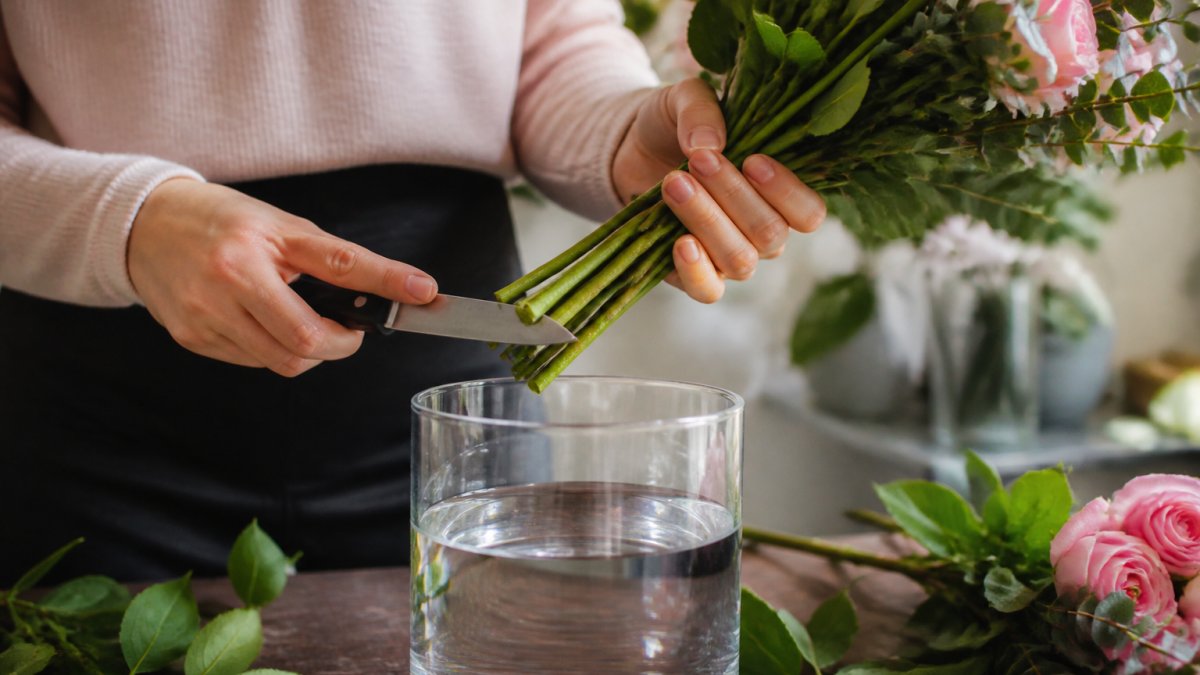
Use a sharp knife or pruning shears. Dull tools crush the stem tissue, blocking water uptake. Cut at a 45-degree angle. The angle increases surface area, allowing the stem to absorb more water. Remove about 2.5 to 5 centimetres from the bottom of each stem.
Cut stems under running water if possible to prevent air bubbles, which block water flow. If not possible, place flowers in water immediately after cutting.
Trim stems every 2-3 days when you change the water. Fresh cuts keep the water-absorption pathway open. Old cuts seal over, reducing hydration.
Step 3: Remove Foliage Below the Waterline
Strip all leaves from the lower portion of the stem; submerged foliage decays and fouls water. Remove leaves up to about 5 centimetres above the water level to keep water clean and extend fresh cut flower longevity.
Use your fingers or a knife to gently remove leaves from bottom up. Damaging the stem reduces water uptake, so work carefully.
Step 4: Use the Best Flower Food for Cut Flowers
Flower food supplies carbohydrates for energy, biocides to control bacteria, and pH adjusters to optimize nutrient uptake.
How flower food works: The science
Cut flowers rely on water-dissolved sugars for energy. Biocides prevent bacterial colonization, which clogs stems and blocks water uptake. Acidic ingredients lower water pH to 3.5-4.5, the optimal range for nutrient absorption; tap water is often neutral to alkaline (pH 7-8), reducing availability.
Commercial flower preservatives
Most florists include flower food packets formulated with precise ratios of sugar, biocides, and acids. Follow instructions exactly. If your bouquet didn’t come with flower food, ask your florist for a packet.
DIY natural flower food recipes
You can make effective flower food at home with common kitchen items.
Basic recipe (for most flowers):
- 1 litre of water
- 15 mL (1 tablespoon) of sugar
- 15 mL (1 tablespoon) of lemon juice or white vinegar
- 3-4 drops of unscented household bleach (5% sodium hypochlorite)
Mix and use instead of plain water. Sugar feeds flower cells, lemon juice/vinegar lowers pH, and bleach kills bacteria at this dilution. Change water every 2-3 days.
Alternative recipe (no bleach):
- 1 litre of water
- 15 mL (1 tablespoon) of sugar
- 15 mL (1 tablespoon) of white vinegar
This works for those avoiding bleach or with pets/children. Without a biocide, change water every 2 days. Vinegar provides acidity and mild antimicrobial properties but is less effective than bleach.
Apple cider vinegar option:
- 1 litre of water
- 30 mL (2 tablespoons) of sugar
- 15 mL (1 tablespoon) of apple cider vinegar
Apple cider vinegar contains acetic acid and trace minerals beneficial for sensitive flowers like hydrangeas and orchids. Change water every 2-3 days.
Choosing the right preservative for your flowers
Most flowers perform well with any recipe. Hard tap water benefits from the bleach recipe’s acidity. Soft water works with the no-bleach recipe. Sensitive flowers (hydrangeas, orchids, tulips) prefer the apple cider vinegar option. Hardy flowers (carnations, sunflowers, chrysanthemums) tolerate any recipe.
Homemade flower food costs pennies and works nearly as well as commercial preservatives. Sugar feeds blooms, acid optimizes pH, and biocides prevent bacterial clogging. Consistent water changes every 2-3 days matter most.
Step 5: Place Flowers Away from Direct Sunlight and Heat
Flower placement involves three distinct factors: light intensity, ambient temperature, and ethylene gas exposure. Each affects vase life through different mechanisms, and understanding them helps you choose the best location for your arrangement.
Sunlight and heat
Direct sunlight heats water and petals, increasing transpiration and accelerating aging. Place arrangements in bright, indirect light; a windowsill with sheer curtains is ideal.
Keep flowers away from radiators, heating vents, and air conditioning ducts. The ideal temperature is 18-21°C (65-70°F); every 3°C (5°F) increase reduces vase life by 2-3 days.
Ethylene gas sensitivity: The hidden culprit
Ethylene is a plant hormone that triggers ripening, flowering, and senescence. Ripe fruit, vegetables, and some plants release ethylene gas into the air. Flowers exposed to ethylene age rapidly, petals wilt, colours fade, and blooms drop prematurely. This is one of the most overlooked factors in cut flower care.
Order Online or Call Now to Order Flowers →
Why ethylene matters:
Ethylene binds to receptors on flower cells, signalling them to age. Even tiny concentrations (as low as 0.1 parts per million in air) can shorten vase life by days. Flowers cannot distinguish between ripening fruit and their own natural aging signal, so they respond as if their time is up.
Which flowers are most sensitive:
- Highly sensitive: Roses, carnations, orchids, lilies, tulips, and sweet peas. These flowers can lose 50% of their vase life if exposed to ethylene for even a few hours.
- Moderately sensitive: Sunflowers, hydrangeas, and chrysanthemums. These tolerate brief ethylene exposure but still show reduced longevity.
- Least sensitive: Dahlias, zinnias, and celosia. These are more resilient but still benefit from ethylene-free environments.
Common ethylene sources to avoid:
- Ripe bananas, apples, avocados, and tomatoes (the strongest emitters)
- Ripening stone fruits (peaches, plums)
- Wilting or decaying plant material
- Certain houseplants (especially those flowering or fruiting)
- Cigarette smoke (contains ethylene)
- Car exhaust (if flowers are near a garage or driveway)
Practical distance guidelines:
Keep cut flowers at least 1-2 metres (3-6 feet) away from fruit bowls or ripening produce. If you have fruit in the room, move the arrangement to another space entirely; ethylene disperses throughout enclosed areas. If you must keep flowers and fruit in the same room, ensure active air circulation (a fan helps) and change the flower water daily to remove any ethylene that has dissolved in the vase water.
Temperature control for longevity
Temperature is one of the easiest ways to extend vase life. Cool rooms slow metabolic processes, including senescence and bacterial growth. Avoid drafts and air conditioning vents that dry out petals. If your home is warm (above 24°C / 75°F), move flowers to a cooler room at night. Some florists recommend placing arrangements in a cool closet or basement for 8 hours overnight to “rest” them and extend vase life by several days.
Ethylene exposure is the #2 reason flowers wilt prematurely (after bacterial contamination). A single ripe banana in the same room can reduce rose vase life from 10 days to 5 days. Separate flowers from fruit and ripening produce without exception.
Step 6: Change Water Regularly and Deadhead
Change water every 2-3 days. This removes bacteria and replenishes nutrients.
When you change water, trim the stems again. Remove a fresh 2.5 to 5 centimetre slice at a 45-degree angle. This reopens the vascular system and restores water uptake.
Deadheading means removing dead or wilting blooms. Pinch off flowers as soon as they start to fade. This redirects energy to remaining blooms. A bouquet with one dying flower looks neglected. Remove it, and the arrangement looks fresh again.
Check the water level daily. Some flowers absorb water quickly. Top up with fresh water if the level drops. Never let stems dry out completely.
Neglecting water changes is the #1 reason flowers wilt prematurely. Bacteria multiply exponentially in old water. Fresh water every 2-3 days is non-negotiable for extending vase life.
Vase Life of Different Flower Types
Different flowers have different longevity timelines. Understanding these helps you set realistic expectations.
Roses: 7-12 days with proper care. Remove thorns carefully to avoid damaging the stem. Roses are sensitive to ethylene gas, so keep them away from fruit.
Tulips: 7-10 days. Tulips continue to grow after cutting. They may lean toward light. Rotate the vase daily for even growth. Keep water cool to slow the growth process.
Sunflowers: 12-14 days. These are hardy flowers. They tolerate temperature fluctuations better than most. Remove lower leaves aggressively, as they decay quickly.
Carnations: 14-21 days. Carnations are the longest-lasting common cut flower. They’re forgiving and adapt well to various conditions. Even neglected carnations last longer than most blooms.
Lilies: 7-10 days. Remove pollen-bearing stamens to prevent staining and reduce ethylene production. Lilies are sensitive to temperature changes.
Hydrangeas: 7-12 days. These thirsty flowers need frequent water checks. Mist the petals daily if the air is dry. They wilt quickly in low humidity.
Orchids: 14-21 days or longer. Orchids are extremely long-lasting. They prefer slightly cooler temperatures and indirect light. Mist roots weekly for best results.
Chrysanthemums: 14-21 days. Mums are tough and forgiving. They tolerate neglect better than most flowers. Even with minimal care, they last weeks.
The key to extending fresh cut flower longevity across all types is consistency. Water changes, stem trimming, and proper placement matter more than the flower type itself. A neglected rose dies faster than a well-maintained carnation.
| Flower Type | Typical Vase Life | Care Difficulty | Best For |
|---|---|---|---|
| Roses | 7-12 days | Medium | Elegant arrangements |
| Tulips | 7-10 days | Medium | Spring bouquets |
| Sunflowers | 12-14 days | Easy | Bold displays |
| Carnations | 14-21 days | Easy | Long-lasting gifts |
| Lilies | 7-10 days | Medium | Focal flowers |
| Hydrangeas | 7-12 days | Medium | Volume arrangements |
| Orchids | 14-21 days | Medium | Luxury displays |
| Chrysanthemums | 14-21 days | Easy | Budget-friendly options |
When you order from Brampton Florist, our designers hand-craft fresh, fragrant bouquets and arrangements to ensure your special moments are celebrated with care. We also include care instructions with every arrangement. Follow those tips, and your flowers will stay vibrant for the full vase life.
Fresh cut flowers deserve care that matches their beauty. The steps above take minutes each day. In exchange, you get blooms that last weeks instead of days.
When you need fresh, high-quality flowers for any occasion, Brampton Florist delivers expertly hand-designed arrangements built to last. Our team selects the freshest blooms and prepares them with professional care. Order online or call us today to experience the difference quality and expertise make.
Frequently Asked Questions
How can I keep fresh cut flowers alive longer?
Start with a clean vase and fresh water. Trim stems at a 45-degree angle, remove foliage below the waterline, and add flower food containing carbohydrates and biocides. Change the water every 2-3 days, keep flowers away from direct sunlight and heat sources, and remove wilting blooms promptly. These steps maximize vase life by reducing bacteria growth and improving nutrient uptake through the flower’s vascular system.
Does sugar water help cut flowers last longer?
Yes, sugar provides carbohydrates that flowers need for energy and hydration. A simple DIY recipe uses 1 tablespoon sugar and a few drops of bleach per litre of water. Commercial flower food is more effective because it combines sugar with biocides to prevent bacterial growth and acidic compounds to balance pH, but sugar water is a practical alternative when preservatives aren’t available.
How often should I change the water in my flower vase?
Replace the water every 2-3 days. Each time, re-cut the stems by about 2.5 centimetres at an angle to remove air bubbles and allow better water absorption. Fresh water reduces bacteria buildup that clogs the flower’s vascular system, directly extending longevity. If water becomes cloudy or discolored, change it immediately.
What is the 3:5-8 rule in floristry?
This guideline helps arrange flowers proportionally: the arrangement should be 1.5 times the height of the vase (the 3:5 ratio), and the width should be about 1.5 times the vase width (the 5:8 ratio). Proper proportions ensure good water circulation, reduce crowding that traps ethylene gas and bacteria, and help your arrangement maintain its appearance longer while maximizing each flower’s access to nutrients.


