


Table of Contents
- Why Local Flowers Cost More: The Supply Chain Reality
- Seasonal Flower Availability and Market Volatility
- Labor-Intensive Cultivation and Harvesting
- Climate-Controlled Storage and Cold Chain Logistics
- Benefits of Ordering From Local Florists
- Cost of Wedding Flowers and Full-Service Design
- Imported Versus Locally Grown: Quality and Vase Life
- How to Reduce Floral Expenses
- Conclusion
- Frequently Asked Questions
Last Updated: September 30, 2026
Why Local Flowers Cost More: The Supply Chain Reality
When you order flowers from a local florist like Brampton Florist, you’re paying for far more than stems and petals. The price reflects a complex supply chain that imported flowers navigate differently, and understanding why local flowers cost more means recognizing the genuine value embedded in every arrangement.
Local flowers travel shorter distances, arriving fresher with longer vase life and more vibrant color. The real cost drivers sit upstream in cultivation, labor, and logistics infrastructure that large-scale imported operations have engineered to minimize. When you choose local, you’re supporting a different economic model.
Most flowers sold in North America travel thousands of kilometers from equatorial regions where year-round growing is possible. Local growers can’t match that scale but offer quality, reliability, and control, attributes that command premium pricing.
Seasonal Flower Availability and Market Volatility
Local flower availability shifts with the seasons, and this constraint directly impacts pricing. When a flower is in season, supply is abundant and costs drop. When it’s out of season, growers either don’t produce it, or they produce it at higher cost in controlled environments. Imported flowers flatten this seasonality by sourcing from multiple climates simultaneously, but local florists must work within natural growing cycles.
Spring brings tulips, daffodils, and peonies at lower cost; summer offers roses, sunflowers, and dahlias; fall shifts to chrysanthemums and asters. Winter is expensive, most local flowers aren’t available, forcing growers to import or use hothouse production. A winter wedding bouquet costs significantly more than the same arrangement in June because flowers are scarcer and more expensive to produce.
Market volatility compounds this: a late frost, disease, or pest outbreak can devastate a crop and spike prices overnight. Imported flowers buffer against this risk through geographic diversification, but local growers absorb the volatility directly. This unpredictability is built into local pricing.
Flowers you see in summer might not exist in winter, or exist at double the cost. Brampton Florist sources the freshest blooms available, sometimes substituting varieties based on what’s actually in season.
Labor-Intensive Cultivation and Harvesting
Growing flowers locally requires far more hands-on labor than industrial-scale imported production. Equatorial farms operate at massive scale with mechanized harvesting; local growers work smaller plots with intensive hand-cultivation, cutting and grading every stem individually.
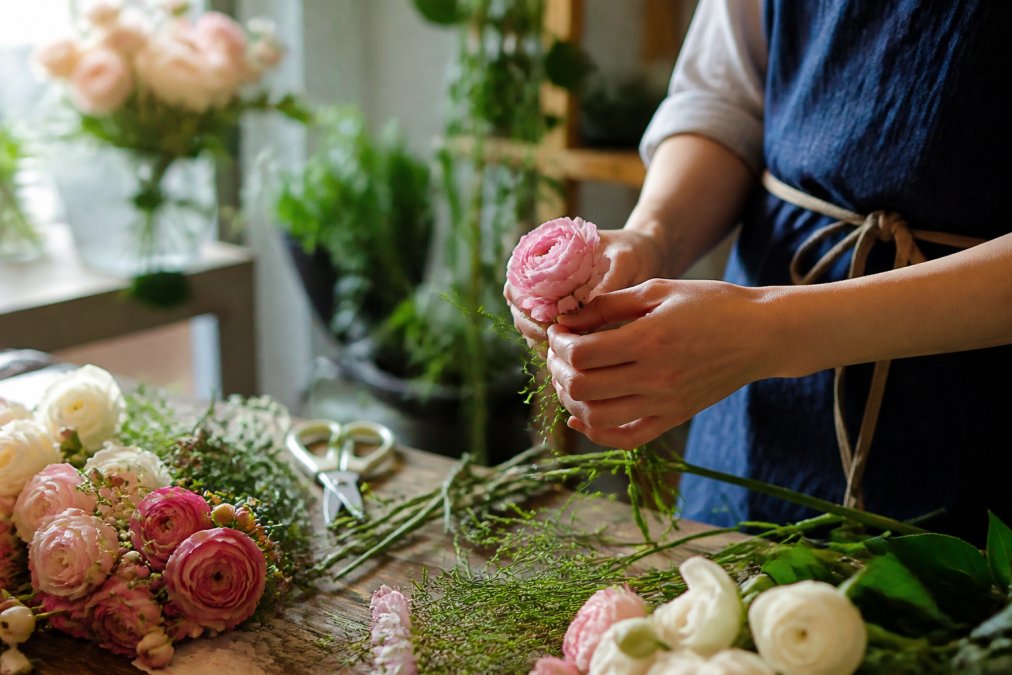
A rose still needs to be harvested at the right moment, processed immediately, and kept cool regardless of farm size. Industrial operations spread labor costs across millions of stems; local growers spread the same labor across thousands. The cost per stem is inherently higher.
Seasonal labor also drives up local production costs. Spring and summer require hiring temporary workers during peak harvest periods, trained and paid competitive wages. Large farms amortize training costs across massive volumes; local growers absorb those costs across smaller harvests.
Climate-Controlled Storage and Cold Chain Logistics
Fresh flowers are perishable and begin to degrade immediately after cutting. Controlling that degradation requires constant temperature management, expensive infrastructure most people never see.
Imported flowers travel in refrigerated containers at 2-4°C from farm to port to distribution center to retail florist. Local flowers travel shorter distances but still need cold storage at every transition point, growers maintain coolers for harvested stems, florists maintain coolers for inventory and arrangements.
This cold chain infrastructure is capital-intensive. Professional flower shops require tens of thousands of dollars in refrigeration equipment. Brampton Florist maintains climate-controlled storage to keep flowers fresh from arrival to delivery. Those costs are embedded in the price you pay.
Imported flowers are produced at scale in facilities already designed for cold storage. Local growers and florists can’t achieve that economy of scale, so cold chain costs per stem are higher. Local florists often maintain lower inventory volumes, meaning their refrigeration equipment is underutilized compared to large distribution centers, yet still consumes electricity and maintenance.
The cold chain keeps fresh flowers lasting 7-14 days in a vase instead of 2-3 days. When you pay more for local flowers, you’re partially paying for this infrastructure.
Benefits of Ordering From Local Florists
Ordering from a local florist offers advantages that imported flowers can’t match. A flower cut 48 hours ago and traveled 50 kilometers is fresher than one cut a week ago and traveled 5,000 kilometers, regardless of refrigeration.
Fresher flowers last longer in the vase, spreading the cost across more days of enjoyment.
Order Online or Call Now to Order Flowers →
A second benefit is customization and expertise. When you order from a local florist, you’re working with someone who knows their suppliers, understands seasonal availability, and can make real-time substitutions based on what’s actually fresh. They can tell you which roses are at their peak this week, which peonies just came in, and which combinations will last longest. That knowledge is valuable when you’re planning a wedding, funeral, or important event.
Local florists also provide reliability. If you need same-day delivery or have an urgent request, a local florist can respond immediately. Brampton Florist offers same-day delivery for orders placed by 1 PM, which is impossible with imported flowers that need to be sourced from distant suppliers. This reliability has real value, especially for emergencies and last-minute celebrations.
A third benefit is supporting local agriculture and small business. When you order from a local florist, you’re funding local growers, local delivery drivers, and local employment. That money circulates in your community rather than flowing to international supply chains. For many customers, this alignment with values is worth the premium price.
Cost of Wedding Flowers and Full-Service Design
Wedding flowers represent the highest-value floral purchase most people make, and understanding the cost structure is essential. A wedding florist doesn’t just provide flowers, they provide design expertise, logistics coordination, and on-site execution across multiple events: ceremony flowers, reception centerpieces, bridal bouquets, boutonnières, and often ceremony décor.
This full-service model drives costs upward in ways that simple bouquet delivery doesn’t. A wedding florist must:
- Meet with the couple multiple times to understand vision and preferences
- Source specific flowers for the wedding date (sometimes months in advance)
- Design and create dozens of arrangements
- Deliver and install flowers the morning of the wedding
- Manage on-site adjustments and problem-solving
Each of these tasks requires skilled labor and specialized knowledge. A florist designing a 150-person wedding is spending 20-30 hours on that single event: consultation, design work, creation, delivery, and installation. That labor is priced into the final cost.
Additionally, wedding flowers often require advance ordering and sourcing. If a couple wants specific varieties that aren’t currently in season, the florist must arrange for them to be grown or imported specifically for that date. This advance commitment means the florist is investing time and resources months before the wedding, with no guarantee of payment until the event occurs. That risk is factored into pricing.
Brampton Florist specializes in wedding design and can handle full-service floral coordination for ceremonies and receptions. Working with a local florist for wedding flowers means you get someone who understands your local venue, knows the logistics of same-day delivery and installation, and can respond to last-minute changes. That expertise and responsiveness carry a premium compared to ordering generic wedding packages from national delivery services.
Imported Versus Locally Grown: Quality and Vase Life
The quality difference between imported and local flowers is real, measurable, and directly tied to how long they last in a vase. Imported flowers are bred and grown for durability during long-distance transit. They’re harvested earlier in their bloom cycle to ensure they don’t open too much during the journey. They’re treated with preservatives and shipped in controlled conditions.
This means imported flowers often arrive at the retail level with significant bloom life remaining, they haven’t peaked yet. They’ll continue to open and develop over several days. This can be desirable if you want flowers that evolve and change. But it also means imported flowers are often younger, less fragrant, and less visually mature when you first receive them.
Local flowers are harvested closer to peak bloom. They’re fresher, more fragrant, and more visually developed when you receive them.
How to Reduce Floral Expenses
If local flowers cost more but you want to maintain quality, several strategies can reduce expenses without sacrificing too much. The first is to embrace seasonality. Ordering flowers that are currently in season is significantly cheaper than ordering out-of-season varieties. Spring and summer flowers cost 20-40% less than winter flowers because supply is abundant and production costs are lower.
Conclusion
Local flowers cost more because they’re grown at smaller scale, harvested at peak quality, transported shorter distances, and supported by labor-intensive cultivation practices. This cost structure is fundamentally different from industrial-scale imported production, and there’s no way to eliminate the difference without sacrificing the qualities that make local flowers valuable.
Frequently Asked Questions
Why are local flowers so expensive compared to big online delivery services?
Local flowers cost more because they skip the long supply chain. They’re grown closer to you, stored in climate-controlled conditions, and hand-arranged by skilled florists. Imported flowers travel thousands of kilometers, losing freshness and requiring multiple handling stages. Local florists source from regional growers and small-scale farms, which have higher labor costs but deliver fresher blooms with longer vase life. You’re paying for quality and freshness, not just flowers.
What are the benefits of ordering from local florists versus online chains?
Local florists offer same-day delivery, personalized design consultation, and flowers that are fresher. You get direct communication with the person designing your arrangement, customization for your specific needs, and support for regional growers. Local businesses also know your area’s climate and can recommend seasonal blooms that thrive locally. For events like weddings, a local florist provides hands-on service and can adjust designs on the day of your event.
How does seasonal flower availability affect what I can order and what it costs?
Seasonal blooms are abundant and affordable during their natural growing season, while out-of-season flowers must be imported or specially cultivated, raising costs significantly. Spring tulips and summer roses cost less when in season; winter arrangements featuring poinsettias or amaryllis are naturally more expensive. Local florists work with seasonal availability to offer cost-effective options year-round. Asking your florist about what’s in season helps you get better value and supports sustainable sourcing practices.
Is it worth paying more for local flowers for a wedding?
For weddings, local florists justify their pricing through expertise, customization, and reliability. They design arrangements that match your venue’s lighting and style, handle last-minute changes, and ensure flowers arrive fresh on your wedding day. Local florists can guarantee freshness because flowers don’t travel long distances. The cost of wedding flowers reflects the labor-intensive design work, premium seasonal blooms, and the florist’s accountability for your event’s success.


