


Table of Contents
- What Defines Luxury Floral Arrangements for Weddings
- How to Choose Wedding Flowers by Season
- Luxury Wedding Floral Installation Ideas
- Average Cost of Wedding Flowers and Budget Planning
- Choosing the Right Floral Designer for Your Vision
- Color Palettes and Botanical Design Trends for 2026
- Post-Wedding Floral Repurposing and Sustainability
- Frequently Asked Questions
Last Updated: September 27, 2026
What Defines Luxury Floral Arrangements for Weddings
Luxury floral arrangements for weddings combine premium blooms, sophisticated color palettes, and meticulous attention to detail to elevate your celebration.
Premium blooms, garden roses, imported peonies, specialty eucalyptus, command higher prices for their rarity and visual impact. Luxury arrangements feature bespoke design: custom compositions created for your venue, color scheme, and vision rather than templated designs.
The difference between competent and luxury arrangements comes down to density, variety, and the skill to balance botanical textures without overcrowding.
Luxury installations include hand-tied bridal bouquets, sculptural reception centerpieces that don’t block sightlines, and ceremony arches or backdrops that frame key moments.
How to Choose Wedding Flowers by Season
Seasonal blooms ensure fresher flowers, better color saturation, and lower costs than out-of-season imports.
Spring and Summer Blooms
Spring and summer offer garden roses, peonies, ranunculus, lisianthus, and mid-summer dahlias, ideal for luxury design.
Spring and summer offer maximum designer flexibility with color, texture, and variety. Premium foliage like eucalyptus, dusty miller, and Italian ruscus adds movement and sophistication.
Peak season (May-August) means higher demand and longer lead times, so book early for summer weddings.
Fall and Winter Premium Options
Fall brings dahlias, chrysanthemums, and hypericum berries; winter offers burgundy garden roses, amaryllis, and deep red ranunculus for dramatic, jewel-toned luxury floral arrangements for weddings.
Winter weddings benefit from jewel tones and emphasize texture over variety, using fewer flower types in higher density with premium foliage.
Winter blooms are often imported, increasing costs. Work with a designer who maintains relationships with premium suppliers to ensure consistent quality.
Luxury Wedding Floral Installation Ideas
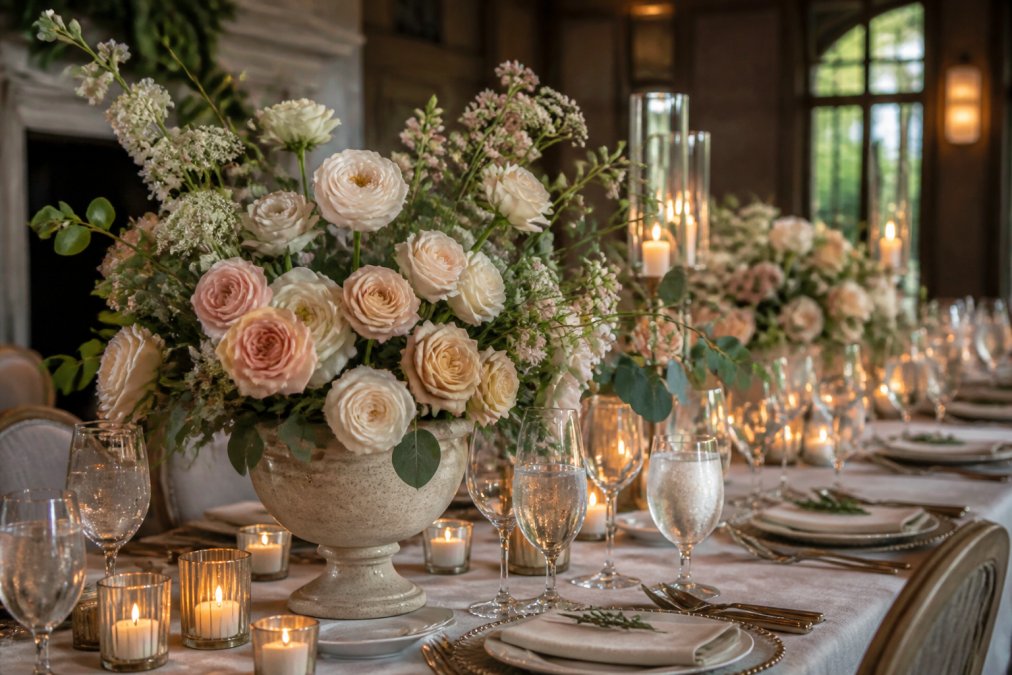
Luxury installation creates a cohesive visual narrative while managing structural, logistical, and safety demands. Every element must reflect your aesthetic and be engineered for stability and longevity.
Bridal Bouquets and Ceremony Florals
The bridal bouquet sets the tone for your design. Premium hand-tied bouquets feature a focal flower (garden roses or peonies), secondary blooms, and foliage that extends the visual line.
Ceremony florals anchor your most emotional moments. A sculptural arch or backdrop creates drama without overwhelming the couple and dominates photography.
Balance is critical: too-dense arches block sightlines; too-sparse ones feel incomplete.
Reception Centerpieces and Tablescapes
Reception centerpieces drive your celebration’s aesthetic with mixed heights, varied textures, and intentional color blocking. Tall installations frame conversation; low arrangements allow sightlines across the room.
Tablescape design integrates florals with linens, glassware, and lighting. Candlelight transforms rose tones and deepens greens.
Centerpiece density should match your venue: large ballrooms accommodate dramatic installations; intimate spaces require restraint.
Floral Backdrops and Ceremony Arches: Engineering and Logistics
A floral arch is fundamentally a structural installation that must withstand weight, environmental conditions, and guest proximity, where design intersects with engineering.
Large arches require frames rated for 50-150 kg. Designers must calculate bloom density, water absorption, and load capacity. Outdoor arches face wind, temperature, and UV challenges.
Order Online or Call Now to Order Flowers →
Water management is critical. Luxury installations require reliable hydration via drip irrigation or manual watering. Many incorporate concealed reservoirs with timers to keep blooms turgid throughout the ceremony.
Installations must be secured with guy-lines, weighted bases, or anchoring systems. Outdoor venues require wind-load assessments and weather contingencies.
Large installations require 4-8 hours setup time. Designers need venue access the day before or early morning, with clear timelines before guests arrive.
The composition should feel intentional, not accidental. Gaps should be strategic, not careless. Color blocking, clustering similar hues rather than scattering them, creates visual impact and photographs beautifully. However, the most visually stunning arch is only successful if it’s structurally sound and remains fresh throughout your ceremony and photographs.
Average Cost of Wedding Flowers and Budget Planning
Pricing for luxury floral arrangements for weddings varies significantly based on bloom selection, installation scale, and delivery complexity. Rather than stating fixed prices, understand that costs depend on several factors: the specific premium blooms you choose, the total number of arrangements, whether you require on-site installation, and your wedding date relative to peak season.
Understanding Luxury Floral Investment and Photography ROI
One of the most overlooked aspects of luxury wedding floral budgeting is the return on investment in professional photography. Your floral arrangements occupy a disproportionate amount of visual real estate in your wedding photographs and video, often 40-60% of the frame in ceremony shots, reception details, and bridal portraits. This means your floral investment directly impacts the visual quality and perceived luxury of your final images.
Budget Allocation Strategy
Within that budget, prioritize based on photographic impact:
Ceremony florals (40-50% of floral budget): This is where most professional photographs originate. Your bridal bouquet, ceremony arch or backdrop, and aisle installations are captured in detail and from multiple angles. Investing heavily here ensures your most-photographed moments feature premium blooms and sophisticated design.
Seasonal Impact on Budget
Peak season (May through August) increases costs by 15-30% due to high demand and limited designer availability. Off-season weddings (November through March) often reduce floral costs by 10-20%, though winter blooms may require imports, offsetting some savings. Spring shoulder season (April, early May) and fall shoulder season (September, October) offer a balance: reasonable pricing with excellent bloom availability.
Choosing the Right Floral Designer for Your Vision
Your floral designer is a collaborator in bringing your wedding vision to life. The right designer understands luxury wedding floral installation not just as a technical skill, but as an art form that enhances your celebration’s overall narrative.
Color Palettes and Botanical Design Trends for 2026
Current luxury wedding floral design trends emphasize bold color choices and mixed botanical textures. The era of safe, neutral florals is fading, couples increasingly choose jewel tones, unexpected color combinations, and arrangements that feel distinctly personal.
Post-Wedding Floral Repurposing and Sustainability
The sustainability conversation extends beyond sourcing, it includes what happens to luxury floral arrangements for weddings after your celebration ends. Many couples now ask whether their ceremony arch or reception centerpieces can be repurposed for other events or donated.
Frequently Asked Questions
What is the 3:5:8 rule for floral arrangements?
The 3:5:8 rule is a foundational principle in floral design that guides proportion and balance. Use three stems of your focal flower (like roses), five stems of a secondary bloom, and eight stems of filler or texture elements. This creates visual harmony and prevents overcrowding. For luxury wedding arrangements, this rule ensures sophisticated composition without appearing sparse or overly dense. Many professional designers adapt this ratio based on arrangement size and venue scale, but it remains a reliable starting point for balanced botanical design.
How do you choose luxury wedding flowers by season?
Seasonal availability directly affects both freshness and cost. Spring offers peonies, tulips, and ranunculus; summer brings garden roses and dahlias; fall features burgundy roses and chrysanthemums; winter showcases amaryllis and premium red roses with evergreen accents. Choosing in-season blooms ensures superior quality, longer vase life, and better value. Local florists source seasonal flowers more reliably than mass-market services. Discuss your wedding date with your designer early, they’ll recommend premium options available during your season and suggest complementary textures like eucalyptus or dusty miller for added sophistication.
What is a realistic floral budget for a wedding?
Wedding floral budgets vary widely based on guest count, venue size, and complexity. Pricing depends on the number of arrangements needed, premium bloom selection, installation labor, and delivery logistics. A local florist can provide a detailed quote once you specify ceremony flowers, bridal bouquet, centerpieces, and any backdrops or installations. Request a breakdown to understand where costs are allocated, premium blooms, labor-intensive designs, and large-scale installations typically command higher investment. Discuss your overall budget openly with your designer; they can recommend high-impact options that deliver luxury aesthetics within your means.
What are the top wedding floral trends for 2026?
Current trends emphasize sculptural arrangements with varied texture, mixed botanical elements, and non-traditional color palettes. Dried flowers and preserved botanicals are increasingly popular alongside fresh blooms for visual interest and sustainability. Oversized installations, asymmetrical designs, and garden-style arrangements (rather than tightly massed bouquets) reflect a shift toward organic, artisanal aesthetics. Moody jewel tones, terracotta accents, and eucalyptus-heavy compositions are prominent. Many couples are requesting bespoke designs that reflect personal style rather than following strict floral conventions. Your designer can advise on which trends suit your venue and vision.
How do luxury floral installations differ from standard bouquets?
Luxury installations involve large-scale, multi-component designs that transform a venue’s atmosphere. These include floral backdrops, ceremony arches, and dramatic centerpiece installations requiring professional setup and maintenance throughout the event. Standard bouquets are hand-tied arrangements for the bridal party and smaller centerpieces. Installations demand advanced structural planning, premium bloom quantities, and specialized labor, florists must account for water management, weight distribution, and real-time maintenance. The ROI of luxury installations is significant in wedding photography and guest experience; they create dramatic visual anchors that elevate the entire aesthetic. Professional designers manage logistics that DIY or budget-focused services cannot.
Why should I order from a local florist instead of a mass-market delivery service?
Brampton Florist hand-crafts each arrangement using fresh, high-quality blooms and offers direct communication with your designer. For weddings, our designers understand venue constraints and adapt designs in real time if needed. You receive personalized customer service, guaranteed freshness, and arrangements that match photos because our expert designers create them specifically for your event. As a family-owned florist, we invest in quality and reputation, and we’re invested in your satisfaction.
What should I discuss with my floral designer at the first consultation?
Bring your wedding date, venue photos, guest count, and budget. Discuss your color vision, style preferences (romantic, modern, garden-inspired), and any cultural or personal floral preferences. Ask about seasonal availability for your date and whether your desired blooms are realistic. Share your photography priorities, some couples prioritize ceremony backdrops, others centerpiece aesthetics. Confirm delivery timing, setup requirements, and whether the designer handles installation or if you need to arrange that separately. Ask for references and portfolio examples of similar-scale weddings. A thorough consultation prevents misalignment and ensures your designer understands your vision before quoting.


