


Last Updated: November 17, 2026
Quick Summary
Choose sympathy flowers in Brampton by first deciding where the arrangement will go and how close you were to the deceased. White lilies, white roses, carnations, and chrysanthemums are the classic appropriate choices, usually paired with soft greens and muted colors. Send them as soon as you learn of the death, ideally before the visitation or service.
- Immediate family and close friends often send larger pieces such as casket sprays or standing arrangements.
- Confirm the funeral home’s receiving hours and procedures directly before you order.
- Keep a sympathy card message to two or three sentences with a specific memory or quality.
- Ask about low-fragrance options before ordering for someone with allergies.
- Honor family requests for donations or no flowers instead of sending an arrangement.
Table of Contents
- Start With the Setting and the Relationship
- Flower Types and Colors That Read as Appropriate Sympathy Flowers
- When to Send Sympathy Flowers and How Delivery Works Locally
- Sympathy Flower Card Messages That Sound Like You
- Flowers for Someone With Allergies, and When to Send an Alternative
- Respecting Cultural, Faith, and Family Preferences
- Choosing by Budget and Arrangement Size
- Ordering Your Sympathy Flowers From a Local Florist
- Frequently Asked Questions
Start With the Setting and the Relationship
Choosing sympathy flowers in Brampton starts with two questions: where will the arrangement go, and how close were you to the person who died? Those two answers narrow your options faster than browsing any catalog. Get the setting and the relationship right, and the rest falls into place.
Sympathy flowers are floral tributes sent to express condolences, and they range from small home bouquets to large standing sprays for a service. The right choice depends on context, not cost.
Funeral Home, Service, or Family Home
Where the flowers will be displayed changes what works. If you already know the setting, you can browse sympathy arrangements for the home or service suited to it. A funeral home usually has space for a standing spray or a large basket near the casket. A family home calls for something smaller that fits on a kitchen counter or entry table. If you are unsure how to handle funeral flower etiquette in more depth, our guide on how to send flowers to a funeral respectfully walks through the finer points before you order.
How Close You Were to the Deceased
Closeness guides scale. Immediate family and very close friends often send larger pieces such as casket sprays or standing arrangements. Colleagues, neighbors, and acquaintances usually send a modest bouquet or a sympathy basket. There is no rule that says you must spend more to show you cared.
Flower Types and Colors That Read as Appropriate Sympathy Flowers
White lilies, white roses, carnations, and chrysanthemums are the classic choices for appropriate sympathy flowers, usually paired with soft greens and muted colors. These flowers carry long-standing associations with remembrance and peace. White signals respect and sincerity. Soft pinks, creams, and lavenders add warmth without feeling celebratory.
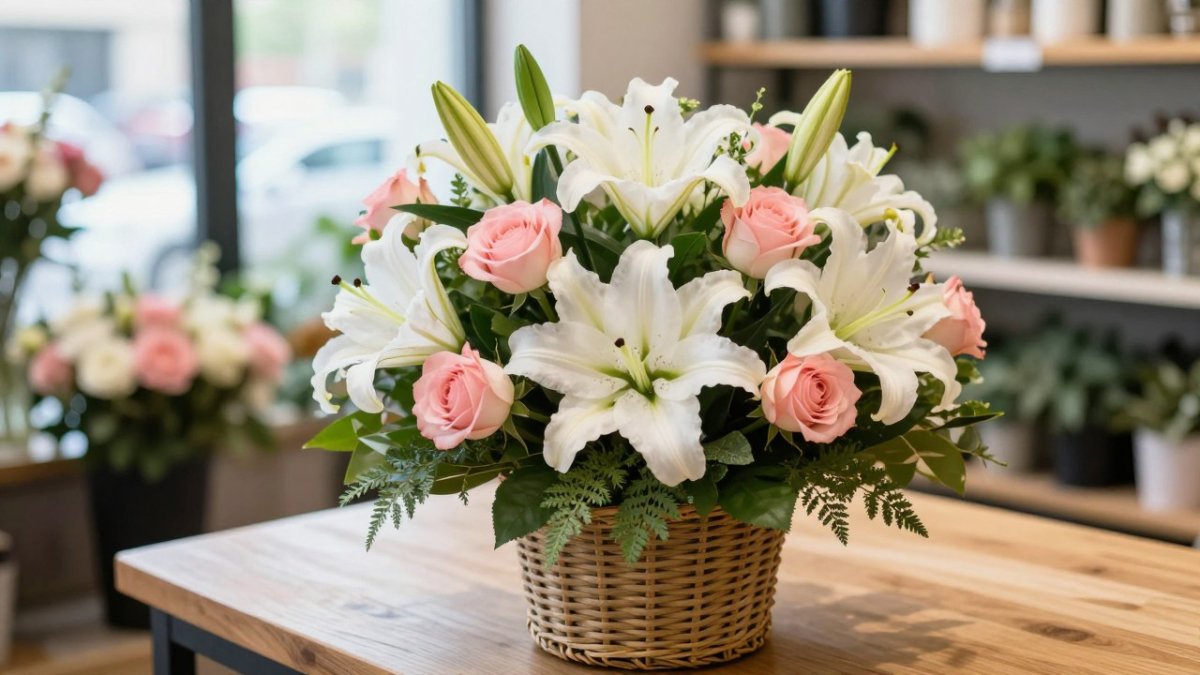
Lilies have long been tied to mourning and comfort. Roses in white or soft shades suggest love and reverence. If you want to browse ready-made options after settling on your flowers, our sympathy baskets are arranged with these traditional blooms in mind.
When to Send Sympathy Flowers and How Delivery Works Locally
Send sympathy flowers as soon as you learn of the death, ideally before the visitation or service. If you miss that window, sending them to the family home in the following weeks is still thoughtful and appropriate.
How Funeral Home Deliveries Actually Work
Funeral homes set their own receiving hours and procedures, so confirm them directly with the funeral home before you order.
When you place an order, have the funeral home name and full street address, the service or visitation start time, and the family’s name as it appears in the obituary ready to share.
A Practical Delivery Checklist
Use this checklist before you order:
- Confirm the service location, full street address, and viewing hours
- Ask the funeral home whether they accept flower deliveries, during which hours, and at which entrance
- Note the family’s name and the deceased’s name exactly as they appear in the obituary
- Choose a delivery window that lands before the visitation begins, not during the service
- Include a card message and your full name so the family knows who sent it
Home Deliveries and Timing
For a family home, the delivery window is more flexible but still worth confirming. If you are sending after the service, a note that says you are thinking of them weeks later is often more meaningful than another arrangement during the busiest days.
If you are planning timing and local delivery, our same-day delivery ordering guide for Brampton explains how same-day service works and what to expect.
Sympathy Flower Card Messages That Sound Like You
A good sympathy card message is short, personal, and specific. Skip the generic lines. Mention a memory or a quality you admired, and sign it clearly so the family knows who sent the flowers. Keep it to two or three sentences.
Here is a simple template you can adapt:
“Dear [Family Name], I was so sorry to hear about [Name]. [He/She] always [a specific memory or quality]. You are in my thoughts during this difficult time. With sympathy, [Your Name]”
If you did not know the deceased well, keep the message focused on the family’s comfort. A few honest words beat a long, formal note.
Flowers for Someone With Allergies, and When to Send an Alternative
For someone with allergies, ask about low-fragrance options before you order, since strongly scented flowers can be a concern for sensitive people.
If you want a long-lasting alternative to fresh flowers for someone with allergies, our Brampton Florists Mixed Planter combines fresh plants in an arrangement that keeps giving comfort for weeks. It suits sympathy, get-well, and just-because gestures alike.
Respecting Cultural, Faith, and Family Preferences
Cultural and faith traditions shape what counts as appropriate. Some families prefer no flowers and ask for donations to a charity instead. Others follow specific customs around colors, flower types, or where arrangements may be placed. When the family requests donations or no flowers, honor that request. A donation in the deceased’s name, paired with a simple card, is a respectful response.
If you are unsure, ask the funeral director or a close family contact. A quick question avoids an awkward mistake. In a diverse community, checking first shows genuine care.
Choosing by Budget and Arrangement Size
Budget and size should match the setting, not your ego. A small bouquet suits a home or an office tribute. A basket works well for a service or a family home. A standing spray or wreath is a larger statement for a funeral service, usually sent by close family, groups, or employers.
What Drives the Price
Three things move the price of a sympathy arrangement more than anything else: the size of the piece, the flowers you choose, and the delivery distance. A larger arrangement uses more stems and more labor, so it costs more. Out-of-season or imported flowers cost more than blooms that are in season locally. Delivery to a funeral home across the region costs more than delivery to a nearby home, and same-day requests can carry a rush fee.
Pricing depends on flower choice, size, and delivery details, so confirm the current price when you order.
A Quick Decision Framework
If you are unsure what to send, work through these questions in order:
- Where will it go? A funeral service calls for a standing spray or wreath; a family home calls for a bouquet or basket; an office or workplace tribute calls for a modest bouquet.
- How close were you? Immediate family and close friends often send larger pieces; colleagues, neighbors, and acquaintances usually send a bouquet or basket.
- What is your budget? Set the amount first, then choose the arrangement style that fits it rather than the other way around.
- Does the family have a preference? Check the obituary for a request for donations or no flowers before you order.
| Arrangement | Typical Use | Relative Size | Typical Price Band (CAD) |
|---|---|---|---|
| Hand-tied bouquet | Home, office, colleague | Small | Low double digits to about $100 |
| Basket arrangement | Service or family home | Medium | Roughly $100 to $200 |
| Standing spray | Funeral service | Large | Several hundred dollars |
| Wreath | Funeral service | Large | Several hundred dollars |
Pricing depends on flower choice, size, and delivery, so check with us for current options.
Ordering Your Sympathy Flowers From a Local Florist
We hand-design our arrangements and offer delivery seven days a week across the area.
When you order, have the service details ready: the location, the family name, the delivery time, and your card message. The clearer the details, the smoother the delivery.
Losing someone is hard, and getting the flowers right should not add to the stress. Memory Lane Florals & Creative Accent is a family-owned local florist, voted the best in the region, with same-day delivery seven days a week and hand-designed sympathy arrangements built around fresh blooms. Tell us the setting and the relationship, and we will help you choose something reverent and fitting. Get started with Memory Lane Florals & Creative Accent and send comfort to a family who needs it.
Frequently Asked Questions
What is the difference between funeral flowers and sympathy flowers?
Funeral flowers are typically sent to the service itself, often as standing sprays, wreaths, or casket sprays that the funeral home displays. Sympathy flowers are sent to the family, either at the funeral home or to their home, and usually arrive as vases, baskets, or bouquets they can keep afterward. Both express condolences, but the setting and arrangement style differ. If you are unsure which the family expects, ask the funeral home or a local florist before ordering.
How soon should you send sympathy flowers?
Send them as soon as you learn of the death, ideally within a few days and before the visitation or service. If you miss that window, flowers sent to the home in the weeks afterward are still meaningful and often appreciated more once the immediate bustle has passed.
What should you write on a sympathy flower card?
Keep it short, warm, and specific. Use the person’s name, offer a brief memory or acknowledgment of their loss, and sign it clearly. Something like ‘Thinking of you and your family. Your father’s kindness at the rink will stay with me. With condolences, Sarah’ works well. Avoid advice, comparisons to your own losses, or phrases like ‘at least.’ If you did not know the deceased personally, address the card to the family and keep the message simple.
What are thoughtful alternatives if the family requests donations or no flowers?
Follow the family’s wishes first. If the obituary names a charity, donate in the deceased’s name and send a card noting the donation was made. If flowers are declined, consider a plant, a meal delivery, or a memorial gift, and ask the family or funeral home before sending anything large. A local florist can also suggest a modest arrangement for the home if the family has asked for no flowers at the service.


