


Table of Contents
- How to Maintain Fresh Cut Flowers: Step-by-Step
- How Often to Change Flower Water (and Why It Matters)
- How to Trim Flower Stems for Better Water Uptake
- How Long Do Cut Flowers Last? Realistic Expectations
- Does Flower Food Work? What You Need to Know
- Troubleshooting Common Problems with Fresh Cut Flowers
- Conclusion: Keep Your Bouquet Beautiful
- Frequently Asked Questions
Last Updated: October 13, 2026
How to Maintain Fresh Cut Flowers: Step-by-Step
Fresh cut flowers can last well over a week when you treat the stems right from day one.
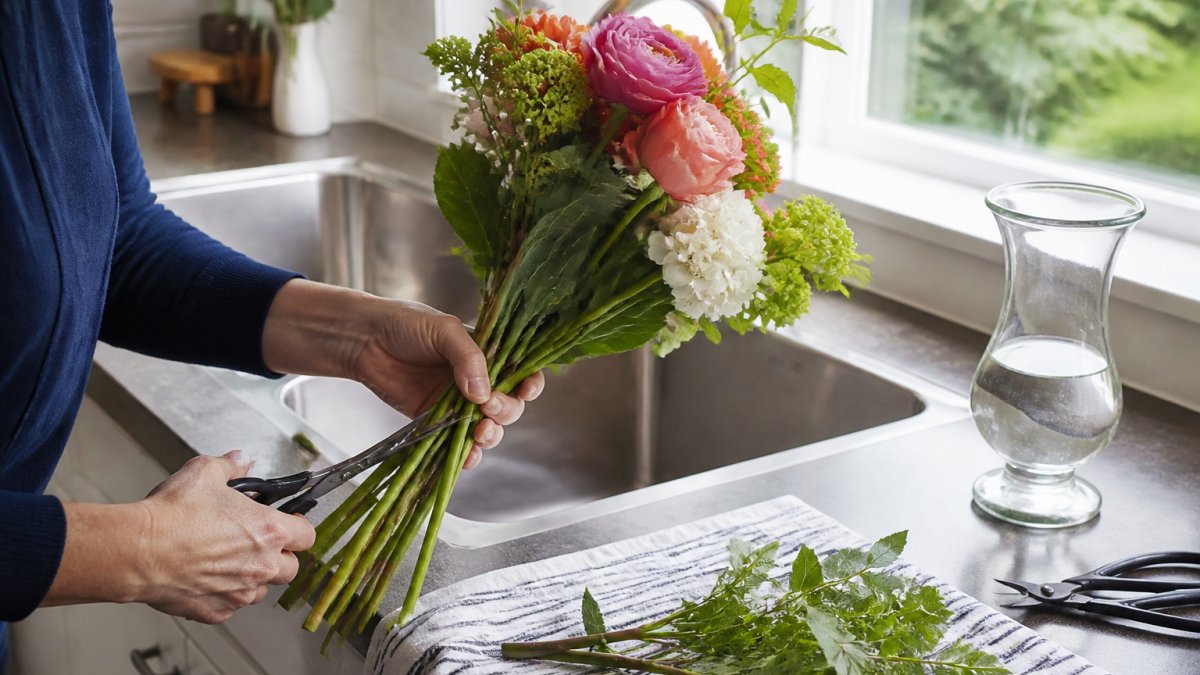
Here’s the part most people miss. Flowers don’t die of old age. They die of blocked stems and dirty water. Fix those two things, and you buy yourself days.
This guide walks you through the full routine, step by step. You’ll also learn how often to change flower water and how to trim flower stems so your bouquet keeps looking fresh.
What You’ll Need Before You Start
Gather these items first so you’re not scrambling mid-arrangement:
- A clean vase, scrubbed with soap and warm water
- Sharp scissors or a knife
- Cool tap water
- Commercial flower food
- A towel for drips
Skip the dull scissors. A crushed stem can’t drink well.
Step 1: Prepare a Clean Vase
Wash your vase with soap and hot water before every use. Bacteria left from the last bouquet will shorten the life of the new one. Rinse it well so no soap film remains.
A sterilized vase gives your flowers a clean start.
Step 2: Mix Fresh Water and Flower Food
Fill the vase about two-thirds full with cool water. Add the flower food packet and stir until it dissolves.
Cool water slows aging. Warm water speeds it up.
Step 3: Remove Leaves Below the Waterline
Strip off any foliage that would sit under the water. Leaves in the water rot fast, and rot breeds bacteria. Remove damaged foliage too, even above the line.
Step 4: Trim Stems at an Angle
Cut each stem at a 45-degree angle with a sharp tool. An angled cut gives the stem more surface area to drink. Cut under water if you can, since it stops air bubbles from blocking the stem.
Step 5: Place in a Cool Spot Away from Sunlight
Set the vase away from direct sunlight, heat vents, and ripening fruit. Fruit gives off a gas that speeds up wilting. A cool location keeps blooms firm longer.
How Often to Change Flower Water (and Why It Matters)
Change the water every two days, and check the water level daily. Top it up whenever it drops.
Why does it matter so much? Cloudy water means bacteria are multiplying. Those bacteria clog the stem ends and stop water from reaching the bloom.
When you change the water, recut the stems and add fresh flower food. This takes two minutes and resets the clock.
If the water turns cloudy before day two, change it right away. Cloudy water is a warning sign, not a schedule item.
How to Trim Flower Stems for Better Water Uptake
Recut stems every time you change the water, and always at an angle. A 45-degree cut keeps the stem end open instead of resting flat on the vase bottom.
Use a sharp knife or scissors. Dull blades crush the stem and seal it shut.
- Cut about 2-3 cm off each stem
- Work at an angle, never straight across
- Trim woody stems with a diagonal slice
- Remove any stem that feels slimy
Fresh water uptake is what keeps petals firm. Once a stem seals over, the bloom droops within hours.
How Long Do Cut Flowers Last? Realistic Expectations
Most cut flowers last five to seven days with good care. Tough varieties push past ten. Delicate blooms fade in three or four. But vase life is not fixed; it is a range you influence with every water change, stem cut, and placement decision.
Here is what to expect by type, along with the specific handling that moves each flower toward the top of its range:
| Flower Type | Typical Vase Life | Care Note |
|---|---|---|
| Carnations | 7-14 days | Tolerate tap water well; recut stems every three days |
| Chrysanthemums | 7-14 days | Trim stems often; remove lower leaves that yellow |
| Roses | 5-7 days | Recut stems every two days; remove guard petals |
| Tulips | 3-5 days | Keep water shallow and cool; they continue to grow and bend |
| Lilies | 7-10 days | Remove pollen to avoid stains; cut stems under water |
| Daisies | 5-7 days | Change water often; they are sensitive to bacteria |
| Hydrangeas | 4-7 days | Recut and dip stem ends in alum powder or boiling water |
| Alstroemeria | 7-14 days | Strip lower leaves; they are heavy drinkers |
| Gerbera daisies | 4-7 days | Keep water shallow; wire the stem if it bends |
| Sunflowers | 5-7 days | Recut stems daily; they clog fast |
Why Some Flowers Last Longer
Woody-stemmed flowers like chrysanthemums and carnations have tougher vascular tissue that resists bacterial clogging. Soft-stemmed flowers like tulips and daisies have open, spongy stems that block quickly when water is dirty. That is why the same care routine produces different results across a mixed bouquet.
Conditioning by Flower Type
Conditioning means preparing stems before they go in the vase. It is the step most home arrangers skip, and it is where vase life is won or lost.
- Roses: Remove guard petals and any leaves below the waterline. Recut at a 45-degree angle under water.
- Tulips: Cut straight across, not at an angle, and use only 2-3 cm of water. Tulips continue to grow after cutting and will bend toward light. Keep them cool and away from fruit.
- Hydrangeas: These wilt fast because their stems have a milky sap that seals the cut. Recut at an angle, then dip the stem end in alum powder or hold it in boiling water for 30 seconds before placing it in cool water. This reopens the vascular channels.
- Lilies: Cut stems under water to prevent air embolisms. Remove the anthers (pollen-covered tips) as soon as the flower opens to prevent staining and to extend bloom life.
- Gerbera daisies: Their hollow stems collapse easily. Support them with a wire inserted up the stem, and keep water shallow, no more than 5 cm, to prevent stem rot.
Measurable Results: What Good Care Actually Buys You
A bouquet cared for with clean water, recut stems, and commercial food can last longer than one left in tap water with no recutting.
A cool room, out of direct sunlight, adds days. A hot windowsill steals them. Dry indoor air from heating or air conditioning pulls moisture from petals and shortens vase life, especially for thin-petaled flowers like tulips and daisies.
Vase life is a range, not a fixed number. Match your conditioning to the flower type, and you move every bloom toward the top of its range.
Does Flower Food Work? What You Need to Know
Commercial flower food works, and the evidence behind it is solid. A floral preservative does three jobs at once:
- It feeds the bloom with sugar
- It kills bacteria in the water
- It balances the water’s acidity for better uptake
Homemade mixes are hit and miss. A splash of lemon-lime soda plus a drop of bleach comes close, but it’s easy to get the ratio wrong. Store-bought flower food is mixed to a tested formula.
Use the packet that comes with your bouquet. If you run out, plain cool water changed often still beats a bad homemade mix.
Troubleshooting Common Problems with Fresh Cut Flowers
Most bouquet problems have a cause you can identify and fix. Work through the symptom, the likely cause, and the corrective action.
Drooping Blooms
Symptom: Flowers that were firm yesterday are now soft and hanging.
Likely causes:
- A blocked stem end from bacteria or an air embolism
- Water level dropped below the stem ends
- The stem was cut with a dull tool and crushed
Fix: Recut 2-3 cm off each stem at a 45-degree angle under water. Change the water and add fresh flower food. If the stem feels slimy, cut above the slimy section. If the stem is hollow and the flower is a gerbera or similar, insert a wire to support it.
Cloudy Water
Symptom: Water turns milky or cloudy within a day or two.
Likely cause: Bacteria multiplying on leaves or stem tissue left below the waterline.
Fix: Empty the vase, wash it with soap and hot water, strip all leaves below the waterline, recut the stems, and refill with fresh cool water and flower food. Cloudy water is a warning sign, not a schedule item; change it immediately.
Bent or Crooked Stems
Symptom: Stems bend instead of standing upright.
Likely causes:
- Tulips and similar flowers continue to grow and bend toward light
- Hollow stems like gerbera collapse under their own weight
- Stems were cut too short for the vase
Fix: For tulips, keep them cool and away from direct light, and use a shallow water level. For hollow stems, insert a florist wire up the stem. For short stems, move to a shorter vase rather than recutting further.
Premature Wilting
Symptom: Flowers wilt within a day of arranging.
Likely causes:
- Water temperature shock; ice-cold water can shock some blooms
- Air embolism from cutting stems in air instead of under water
- Flowers were already old when purchased
Fix: Use cool, not freezing, water. Recut stems under water to prevent air from entering the vascular system. If the flowers were purchased already open and soft, no amount of care will restore them; start with fresher blooms.
Yellowing Leaves
Symptom: Leaves turn yellow and drop.
Likely cause: Old foliage sitting in water, or leaves that were damaged before arranging.
Fix: Strip yellow leaves immediately. Remove any foliage below the waterline. Refresh the vase with clean water and food.
Slimy Stems
Symptom: Stem ends feel slippery or smell bad.
Likely cause: Bacterial growth on the stem surface.
Fix: Cut above the slimy section with a sharp, clean tool. Wash the vase thoroughly. If the slime has traveled more than a few centimeters up the stem, the flower is unlikely to recover.
Flowers That Never Open
Symptom: Buds stay tight and eventually dry out.
Likely causes:
- Buds were cut too early and lack the sugar reserves to open
- Water uptake is blocked
- Ethylene exposure from ripening fruit nearby
Fix: Recut stems and change water. Move the arrangement away from fruit. Some flowers, like lilies and alstroemeria, open best in warm room temperatures; a cool spot can actually stall them.
Never skip the vase wash between bouquets. Leftover bacteria from the last arrangement will cut the new one’s life short, no matter how good your water is.
When to Give Up
If a stem is slimy more than a few centimeters up, if the flower head is brown and dry, or if the petals fall at a touch, the bloom is past saving. Remove it so it does not contaminate the rest of the arrangement. A single rotting stem can shorten the life of every flower in the vase.
Conclusion: Keep Your Bouquet Beautiful
Keeping a bouquet fresh takes minutes a day, not hours. Clean water, an angled cut, and a cool spot do most of the work. The rest is just habit.
If you’d rather skip the guesswork, Memory Lane Florals & Creative Accent can help. We’re a family-owned florist with hand-designed arrangements, seven-day service, and same-day delivery.
Frequently Asked Questions
What can I do to keep cut flowers fresh longer?
Start with a clean vase and fresh, cool water. Remove any leaves that would sit below the waterline, and trim the stems at an angle before arranging. Change the water every two days and recut the stems each time. Keep the bouquet away from direct sunlight, heat sources, and ripening fruit. Using a floral preservative can also help extend vase life.
How often should I change the water in a flower vase?
Change the water every two days, or daily if the water looks cloudy. When you change it, recut the stems at an angle and remove any spent blooms or damaged foliage. This routine keeps bacteria levels down and helps the flowers take up water efficiently.
Should I cut flower stems at an angle?
Yes, an angled cut gives the stem a larger surface area for water uptake and prevents the stem from sitting flat against the bottom of the vase. Use a sharp knife or floral scissors to make a clean cut about 2.5 to 5 centimeters (1 to 2 inches) from the bottom, and repeat every time you change the water.
Does adding sugar to water help flowers last longer?
Sugar provides energy for the flowers, but without an antibacterial agent, it also feeds bacteria that can clog stems. Commercial flower food includes sugar plus ingredients to fight bacteria and acidify the water. If you use a homemade mix, add a few drops of bleach or lemon juice to keep bacteria in check, but commercial food is more reliable.


